Description
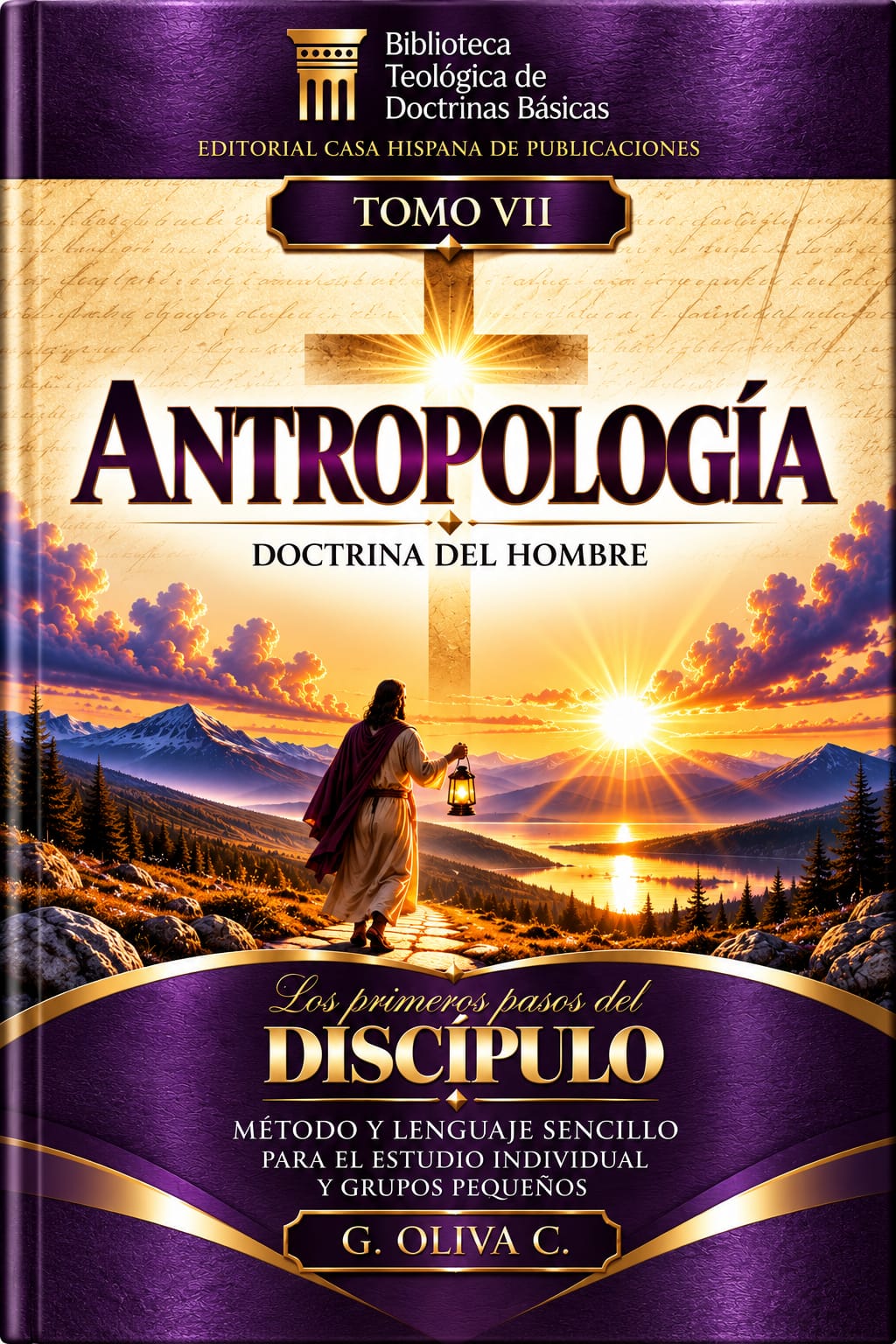
Anthropology, as the theology of man, is a systematic study of the biblical and theological understanding of the human being, addressing the fundamental questions concerning human origin, nature, identity, dignity, constitution, purpose and relationship with God. The work starts from a central conviction: no Christian understanding of the human being can be built exclusively from biological, psychological, sociological or philosophical categories. These disciplines contribute indispensable knowledge, but theological anthropology introduces a different and decisive question: what does it mean to be human before God? Anthropology is one of the fundamental fields of systematic theology because it directly connects the doctrine of God with creation, sin, salvation, Christology, pneumatology and eschatology. To ask who the human being is leads inevitably to asking who created them, for what purpose they exist, what happened to their moral condition, why they need redemption and towards what destiny God directs human existence. In this sense, theological anthropology does not study man as an isolated reality, but as a creature whose existence acquires meaning within the history of creation and redemption. The biblical starting point lies in the affirmation that the human being has been created by God. This declaration establishes an essential difference from any conception that regards the person solely as the product of impersonal forces or as a self-sufficient reality. Theologically, the human creature has a received existence. It is not the ultimate ground of itself. Its life, its capacities and its vocation are understood within a relationship of dependence on the Creator. This creaturely condition, however, does not diminish human dignity. On the contrary, it grounds it. Genesis presents man and woman created in the image and likeness of God, an affirmation that becomes one of the pillars of all Christian anthropology. The imago Dei confers a dignity that precedes social, economic, ethnic, cultural or political differences. A person's worth does not depend on their productivity, wealth, intelligence, influence, nationality or position within a given society. Human dignity is not granted by power, the market or society; from the theological perspective, it is rooted in the human creature's relationship with its Creator. The work therefore explores in depth the meaning of the image of God. This doctrine should not be reduced to a single human capacity, such as rationality, will or moral conscience. The theological tradition has developed different interpretations of the imago Dei: some have stressed particular human faculties; others, the relational dimension; others, the human being's representative responsibility within creation. An integral approach makes it possible to recognise that the image of God has personal, relational, ethical and vocational dimensions. Man appears in Scripture as a being created for relationship. His existence unfolds in relation to God, to himself, to other people, to the community and to the rest of creation. This relational dimension makes it possible to move beyond an excessively individualistic anthropology. Biblically, the person does not exist as a unit closed in on itself. Human life is built through bonds, responsibilities, reciprocity and belonging. In this way, theological anthropology must also ask about the constitution of the human being. Biblical concepts such as body, soul, spirit, heart, mind and flesh have given rise to important debates within the history of theology. The dichotomist, trichotomist and holistic positions have sought to explain the complexity of the person in different ways. The work examines these interpretations while avoiding turning dynamic biblical categories into artificially rigid divisions. The body has a special importance here. A deeply biblical theology of man cannot regard the bodily as an inferior dimension of existence. The human being is an embodied creature. Human beings work, love, suffer, celebrate, grow old, serve and form relationships through their bodily existence. The Christian hope of the resurrection confirms, moreover, that biblical salvation does not consist simply in escaping the bodily condition. Body – Soul – Spirit – Mind – Will – Affectivity – Relationality – Dignity must be understood within the complex unity of the person. Biblical anthropology leads inevitably to the problem of sin. The human being created in the image of God is also the human being affected by the fall. This tension is indispensable. An anthropology that ignores human dignity easily ends up justifying dehumanisation; but an anthropology that ignores the reality of sin runs the risk of constructing a naive view of the human condition. Sin affects the relationship with God and has consequences for human relationships, conscience, the exercise of power, social coexistence and the relationship with creation. The fall does not eliminate the human condition or turn the person into a creature devoid of worth, but it introduces a profound moral and spiritual distortion. For that reason, the doctrine of sin must be studied together with the doctrine of creation. From the author's perspective, this tension can be expressed through a fundamental theological sequence: Creation – Image Of God – Fall – Redemption – Restoration – Glorification. This structure prevents Christian anthropology from ending in the diagnosis of the fallen condition. The Gospel introduces the possibility of restoration. The anthropological question thus finds its decisive point in Christ. Jesus Christ is not only the one who saves the human being; he is also the one in whom humanity according to God's purpose can be contemplated. For this reason, Christology and anthropology are deeply related. Christ reveals God, but he also displays the obedience, holiness, love, service and communion that characterise a human existence fully oriented towards the Father. Salvation then acquires an extraordinary anthropological dimension. Regeneration, justification, adoption, sanctification and glorification are not abstract concepts: they describe God's action upon concrete persons. The Gospel does not merely alter the believer's future destiny; it begins a transformation of their identity, relationships, character and way of living. Here the work of the Holy Spirit acquires particular relevance. Christian anthropology cannot understand human transformation solely as the result of moral discipline or personal effort. The Spirit takes an active part in the regeneration and sanctification of the believer, producing a life progressively conformed to the character of Christ…
Category
- RELIGION AND SPIRITUALITY
- CHRISTIANITY
- CHRISTIAN THEOLOGY
- SYSTEMATIC THEOLOGY
- DOGMATIC THEOLOGY
- THEOLOGICAL ANTHROPOLOGY
- DOCTRINE OF HUMANITY
- THE CREATION AND NATURE OF THE HUMAN BEING
- THE IMAGE AND LIKENESS OF GOD
- HUMAN CONSTITUTION
- HUMAN DIGNITY AND RESPONSIBILITY
- THE FALL AND REDEMPTION OF HUMANKIND
Rights for this book
We turn publishing rights into international growth, connecting authors and publishers with new markets, new readers and new partners around the world.
Technical details
- Title
- Antropología
- Author
- G. Oliva C.
- Imprint
- Grupo Editorial casa Hispana
- Size
- 15x23cms
- Edition
- 1st edition, 2026
- Published in
- Chile
- Year of publication
- 2026
- Available languages
- Spanish, English, German, Portuguese
- Binding
- Paperback with flaps
- Pages
- 481