Description
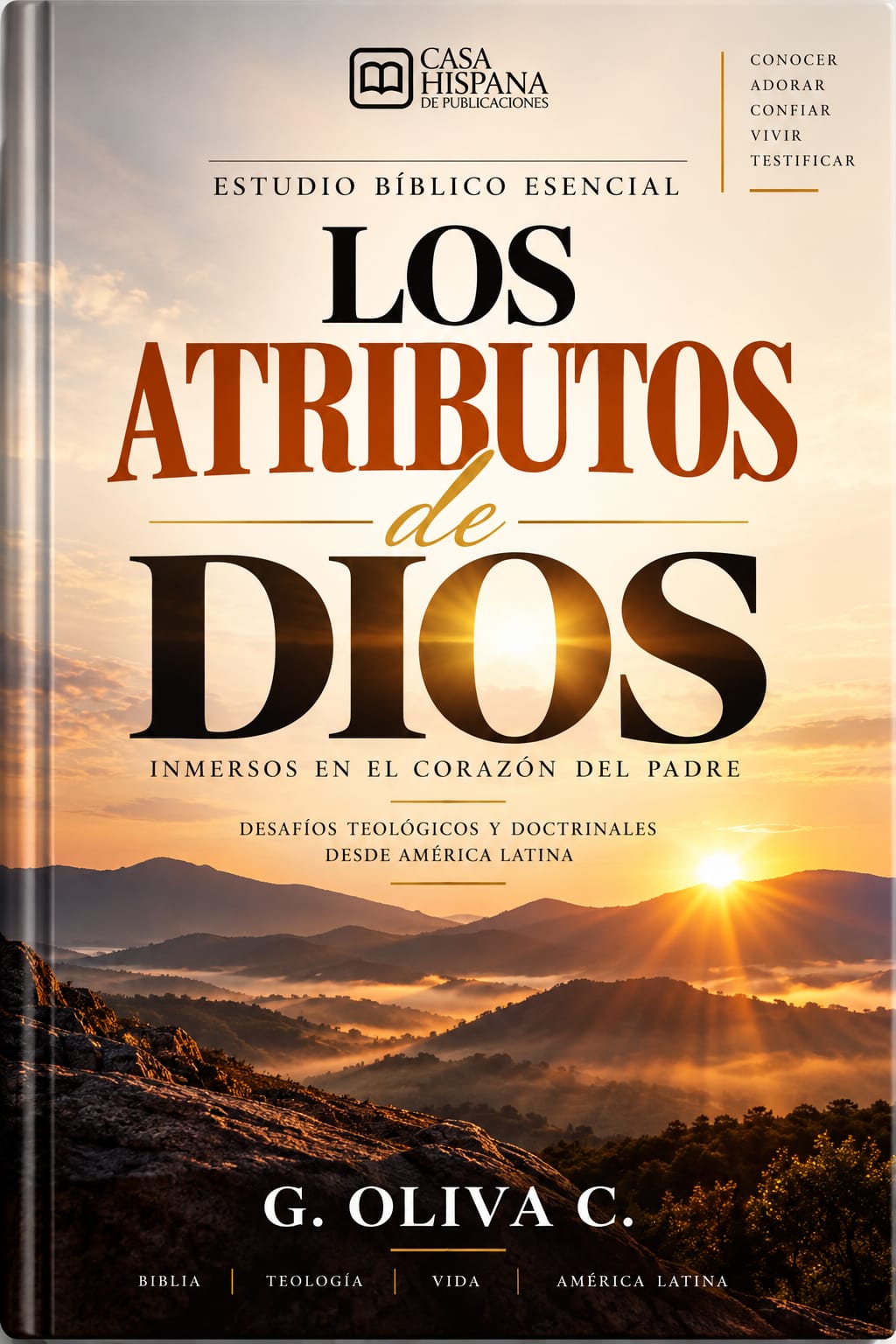
The attributes of God are the essential qualities through which Christian theology seeks to understand and describe the nature, character and perfections of the divine being; to study these attributes does not mean attempting to reduce God to human categories, but approaching with reverence what God has made known about himself through the Scriptures; this understanding is a central concern of the author, who throughout the research seeks to recover a doctrine of God that does not remain confined to the conceptual sphere but dialogues directly with spirituality, the formation of the believer, the life of the church and the daily experience of faith; from this perspective, to know the divine attributes means advancing from theological information towards an understanding capable of producing worship, trust, obedience and transformation. One of the concerns guiding the author's reflection consists precisely in preventing the study of God from being reduced to abstract definitions disconnected from Christian experience; for this reason the research proposes understanding each attribute not only from its doctrinal formulation but also from its spiritual, pastoral and communal implications; the fundamental question is not only what it means to affirm that God is holy, just, loving, omnipotent or merciful, but what consequences that affirmation has for whoever confesses belief in that God, and how such knowledge changes their way of understanding existence, relating to others, facing suffering, practising justice, developing their spirituality and taking part in the mission of the church. Traditionally theology has distinguished between incommunicable and communicable attributes; this classification makes it possible to organise the study without fragmenting the divine nature, because God remains one and indivisible in all his perfections; the incommunicable attributes highlight characteristics that belong singularly to God, while the communicable ones allow us to recognise certain qualities of his character that can be reflected in a limited way in human beings; from the perspective developed by the author, this distinction also has a pedagogical function, because it helps the believer to recognise at the same time the absolute transcendence of God and their calling to reflect in human existence those virtues that belong to his character. Immutability expresses that God remains constant in his nature, character, purposes and faithfulness; Malachi 3:6 declares that God does not change, while James 1:17 affirms that in Him there is no variation or shadow of change; for the author this doctrine acquires special relevance in the face of a society marked by uncertainty, the fragility of commitments and the permanent transformation of human reference points, because it makes it possible to find in God a foundation that does not depend on the fluctuations of history or on personal circumstances; the research thus underlines that immutability should not be studied solely as a metaphysical property but also as a foundation of trust, hope and perseverance. The eternity of God means that his existence is not limited by the beginning and end proper to creatures; Psalm 90:2 declares that from everlasting to everlasting He is God, while Revelation 1:8 presents the Lord as the one who is, who was and who is to come; this dimension leads the author to highlight the need to recover a spirituality capable of contemplating human existence from a perspective that transcends immediacy, because contemporary society frequently organises life around what produces immediate results, while the eternity of God reminds the believer that their existence is set within purposes that surpass the temporal limits of their own generation. Omnipresence expresses that God is not limited by space and that his presence reaches all of creation; Psalm 139:7-10 presents the impossibility of escaping the divine presence, while Jeremiah 23:23-24 declares that God fills the heavens and the earth; at this point the author's pastoral concern acquires particular importance, because omnipresence can become a deeply comforting doctrine for those going through experiences of loneliness, displacement, migration, persecution, suffering or isolation; no human border, no geographical distance and no social condition can place a person outside the presence of God. Omnipotence affirms that God possesses absolute power to accomplish whatever corresponds to his nature and will; Genesis 18:14 asks whether anything is too hard for the Lord, while Luke 1:37 affirms that nothing is impossible for God; however, the author considers it necessary to avoid superficial interpretations of this doctrine, because divine power must never be separated from the holiness, justice, love, wisdom and goodness of God; the research therefore insists on an integrated reading of the divine attributes: the omnipotent God does not exercise an arbitrary power but a power inseparable from the totality of his character…
Category
- THEOLOGY
- SYSTEMATIC THEOLOGY
- CHRISTOLOGY
- CONTEXTUAL THEOLOGY
- LATIN AMERICAN THEOLOGY
- MISSIOLOGY
- SPIRITUALITY
- EVANGELISATION
- CHRISTIAN EDUCATION
Rights for this book
We turn publishing rights into international growth, connecting authors and publishers with new markets, new readers and new partners around the world.
Technical details
- Title
- Los Atributos de Dios
- Author
- G. Oliva C.
- Imprint
- Grupo Editorial casa Hispana
- Size
- 15x23cms
- Edition
- 1st edition, 2026
- Published in
- Chile
- Year of publication
- 2026
- Available languages
- Spanish, English, German, Portuguese
- Binding
- Paperback with flaps
- Pages
- 465