Description
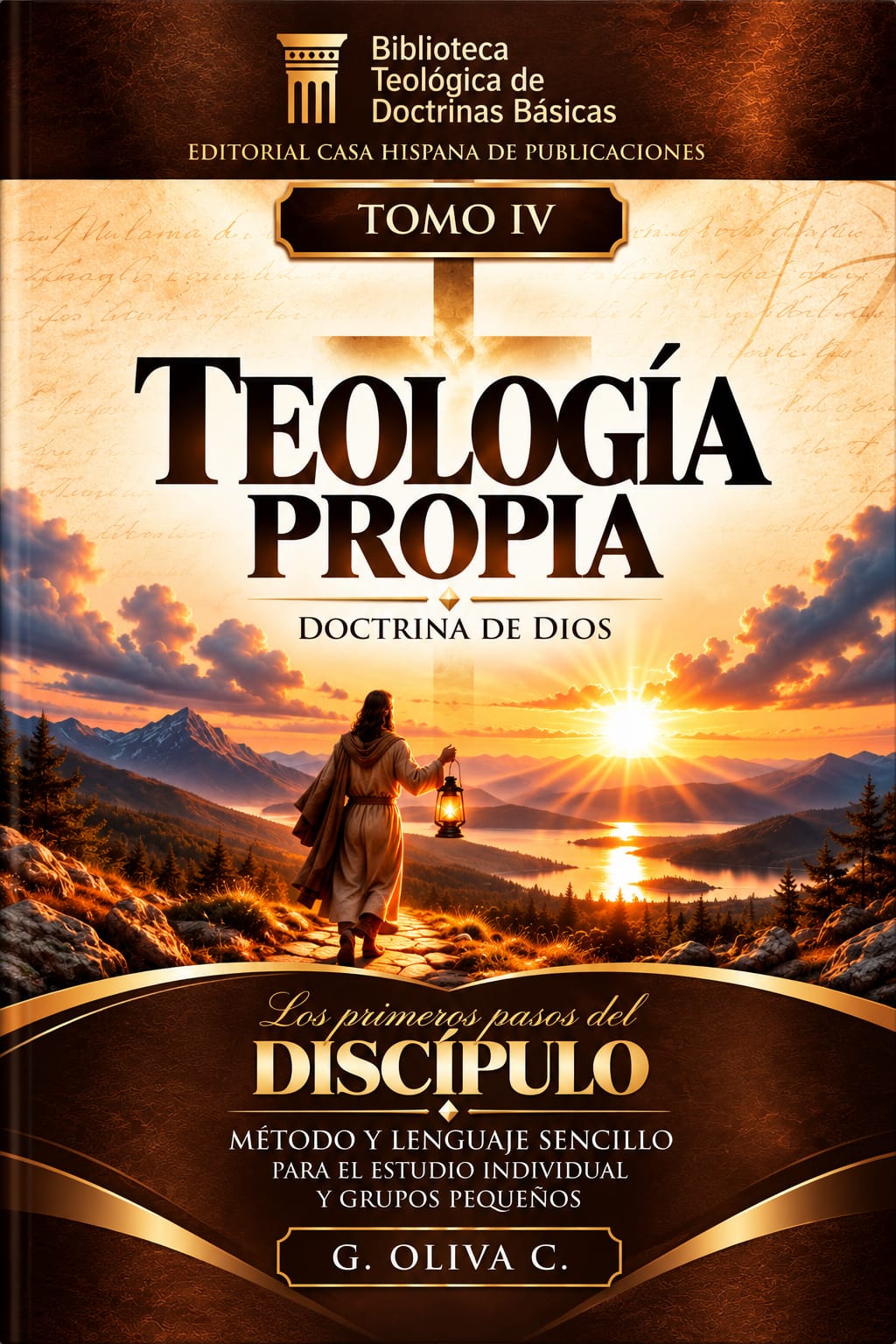
Theology Proper, as the doctrine of God the Father, is a systematic study of one of the fundamental cores of the Christian faith: the knowledge of God. Every theological construction begins, explicitly or implicitly, with a particular understanding of who God is, how he reveals himself, what his attributes are, how he relates to creation and in what way his identity as Father illuminates the history of salvation. For this reason, to speak of God is not simply one more chapter within systematic theology; it means addressing the foundation on which the other Christian doctrines rest. The expression theology proper, traditionally used within systematic theology, refers specifically to the study of God: his existence, knowledge, revelation, being, names, attributes, will and works. Although it maintains an inseparable relationship with the doctrine of the Trinity, Christology and pneumatology, it has a particular object: to understand, as far as biblical revelation allows, who God is and what it means to confess him as Lord, Creator and Father. The work begins by acknowledging a fundamental epistemological limitation: God cannot become an object of knowledge in the same way as a created reality. The human being has no autonomous capacity to grasp the divine mystery exhaustively. If we truly know anything about God, it is because God has chosen to make himself known. Christian theology therefore begins not with the human capacity to reach God, but with the divine initiative of self-revelation. God makes himself known, and theology responds to that revelation. This affirmation establishes the methodological starting point of the work. Creation makes it possible to recognise manifestations of the power, wisdom and greatness of God, while special revelation provides the decisive framework for knowing his will and his redemptive action. Scripture consequently occupies a normative place in the formulation of the Christian doctrine of God. The question of the existence of God has accompanied humanity across different cultures and historical periods. Philosophy, religion and theology have developed cosmological, teleological, ontological and moral arguments, among others, in order to reflect rationally on the divine existence. Teología Propia examines the value of these approaches without confusing them with biblical revelation. Rational arguments can contribute to the philosophical discussion about God, but the identity of the God confessed by the Christian faith is not simply derived from a metaphysical deduction. He is the God who reveals himself and acts in history. In this way, the book moves from the question DOES GOD EXIST? Towards a still deeper one: WHO IS GOD? Scripture presents God through names, actions, attributes, relationships, promises and historical acts. God creates, calls, speaks, judges, liberates, sustains, forgives, establishes covenant and leads history towards his purposes. The doctrine of God cannot therefore be reduced to a collection of abstract concepts. The God of the Bible is also known through his works. One of the great axes of the research concerns the divine attributes. Holiness, love, justice, mercy, goodness, truth, faithfulness, wisdom, omnipotence, omniscience, omnipresence, eternity, immutability and sovereignty make it possible to express different aspects of what revelation communicates about God. However, these attributes must not be imagined as independent fragments which, added together, would make up God. Classical doctrine insists that God is one and that his perfections belong inseparably to his being. This consideration is especially important when love and justice are related to one another. There is no loving God set against a just God. Nor can holiness be used to deny mercy, or mercy to eliminate justice. God is holy in his love, just in his mercy, true in his grace and faithful in all his works. The holiness of God occupies a decisive place. God is absolutely distinct from everything that belongs to the created order, and morally perfect. The biblical experience of the encounter with divine holiness reveals simultaneously the greatness of God and the limited and sinful condition of the human being. The doctrine of God thus leads inevitably towards anthropology and hamartiology: understanding who God is changes our understanding of who we ourselves are. Alongside holiness there appears love. Christian revelation does not present love simply as an occasional action of God, but as a reality inseparable from his character. This love is expressed in creation, patience, providence, covenant, mercy and, in a culminating way for the Christian faith, in the redemptive work accomplished in Christ. It is precisely here that the doctrine of God the Father acquires its specifically Christian depth. To call God Father is not simply an affective metaphor, nor a projection of human family experience onto the divinity. Divine fatherhood must be understood from biblical revelation and, especially, within the eternal relationship between the Father and the Son. Jesus Christ introduces the believer into a profoundly relational understanding of God. The Father sends the Son; the Son reveals the Father; and through the work of the Spirit believers are brought into a filial relationship with God. For this reason, the doctrine of the Father cannot be isolated from the Trinity…
Category
- RELIGION AND SPIRITUALITY
- CHRISTIANITY
- CHRISTIAN THEOLOGY
- SYSTEMATIC THEOLOGY
- DOGMATIC THEOLOGY
- THEOLOGY PROPER
- THE DOCTRINE OF GOD
- THE DIVINE NATURE AND ESSENCE
- THE ATTRIBUTES OF GOD
- DIVINE REVELATION
- THE TRINITY
- THE SOVEREIGNTY AND PROVIDENCE OF GOD
Rights for this book
We turn publishing rights into international growth, connecting authors and publishers with new markets, new readers and new partners around the world.
Technical details
- Title
- Teología propia
- Author
- G. Oliva C.
- Imprint
- Grupo Editorial casa Hispana
- Size
- 15x23cms
- Edition
- 1st edition, 2025
- Published in
- Chile
- Year of publication
- 2025
- Available languages
- Spanish, English, German, Portuguese
- Binding
- Paperback with flaps
- Pages
- 467