Description
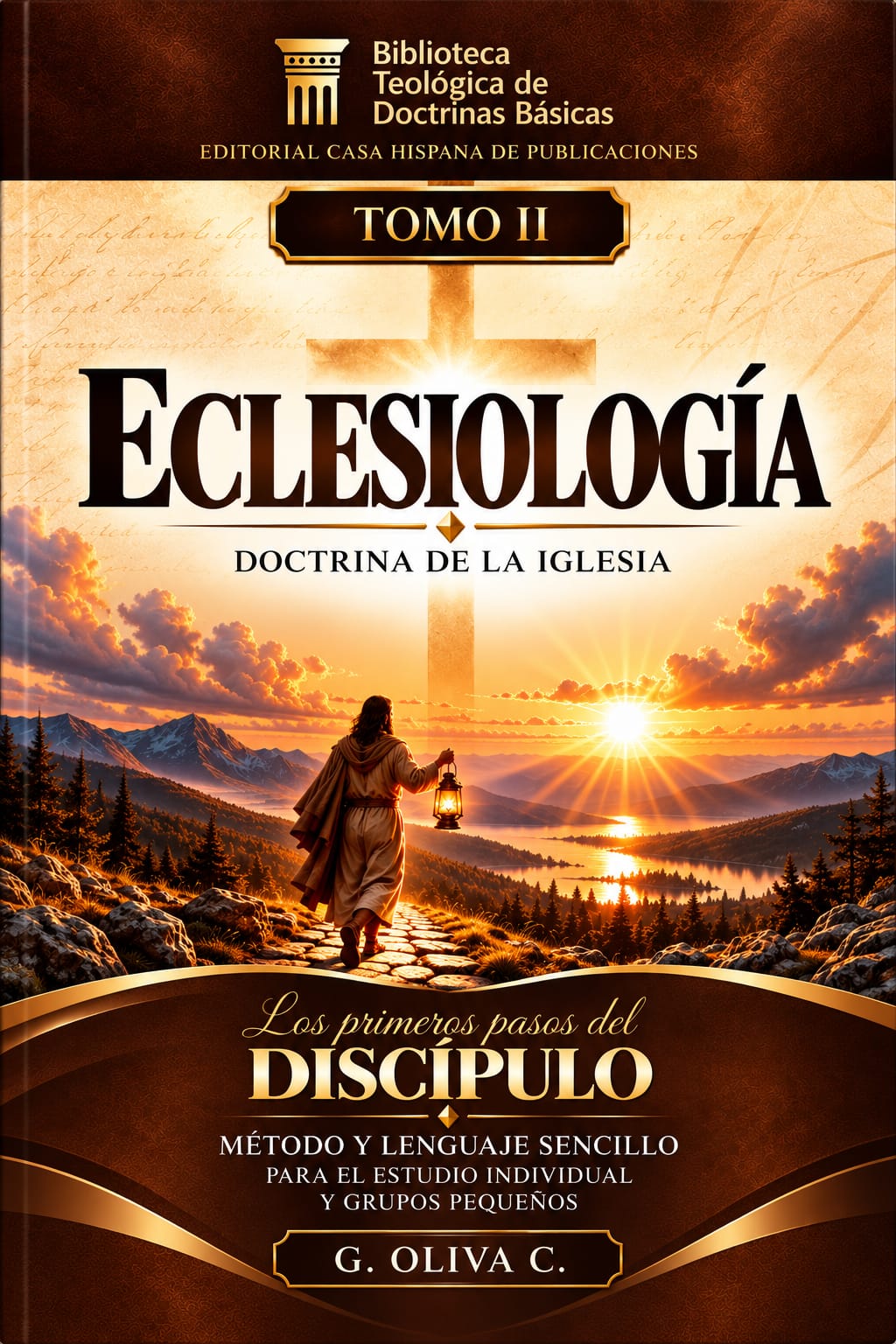
In this book the author addresses another of the Church's important doctrines: Ecclesiology, the branch of Christian theology that studies the nature and mission of the Church. Its importance is significant for several reasons covering both theological and practical aspects; here the author addresses its implications in detail, such as the Identity of the Church, Unity and Diversity, Mission and Purpose, Governance and Structure; on this point the author explains how ecclesiology studies the organisation and governance of the Church, including leadership and authority within the Christian community. This covers different models of church government, such as the episcopal, the presbyterian and the congregational, providing a basis for structure and decision-making in the Church. Other important themes: Symbols and Rites, Relationship with Society, Practical Theology, highlighting the practical implications for the daily life of believers. It guides the practice of worship, discipleship, fellowship and service, providing a theological basis for the life and mission of the Church day by day. In short, ecclesiology is crucial to Christian theology because it defines the identity, mission and purpose of the Church, guides its structure and governance, contextualises symbols and rites, and guides its relationship with society. It also has practical implications for the daily life of believers and is fundamental to Christian dialogue and unity… This work addresses, in a biblical, systematic, historical and contextually responsible way, the doctrine of Ecclesiology, one of the fundamental areas of Christian theology. Understood as the discipline that studies the nature, identity, constitution, mission, organisation and hope of the Church, Ecclesiology holds an indispensable place within theological reflection, since it makes it possible to answer not only the question of what the Church is, but also who constitutes it, what its foundation is, why it exists, how it ought to live and what its responsibility is within the world. The author develops this research aware that to speak of the Church means approaching a reality that is deeply theological and, at the same time, historical, communal and human. For this reason, the study seeks to move beyond a reduced understanding of the Church as a building, an administrative structure, a religious organisation or a social institution. From the biblical perspective, the Church is above all a community called together by God, constituted around Jesus Christ, given life by the Holy Spirit and sent into the world to take part in the mission of God…
Category
- THEOLOGY
- SYSTEMATIC THEOLOGY
- ECCLESIOLOGY
- THE DOCTRINE OF THE CHURCH
- MISSIOLOGY
- PASTORAL THEOLOGY
- CONTEXTUAL THEOLOGY
- LATIN AMERICAN THEOLOGY
Rights for this book
We turn publishing rights into international growth, connecting authors and publishers with new markets, new readers and new partners around the world.
Technical details
- Title
- Eclesiología
- Author
- G. Oliva C.
- Imprint
- Grupo Editorial casa Hispana
- Size
- 15x23cms
- Edition
- 1st edition, 2026
- Published in
- Chile
- Year of publication
- 2026
- Available languages
- Spanish, English, German, Portuguese
- Binding
- Paperback with flaps
- Pages
- 472