Description
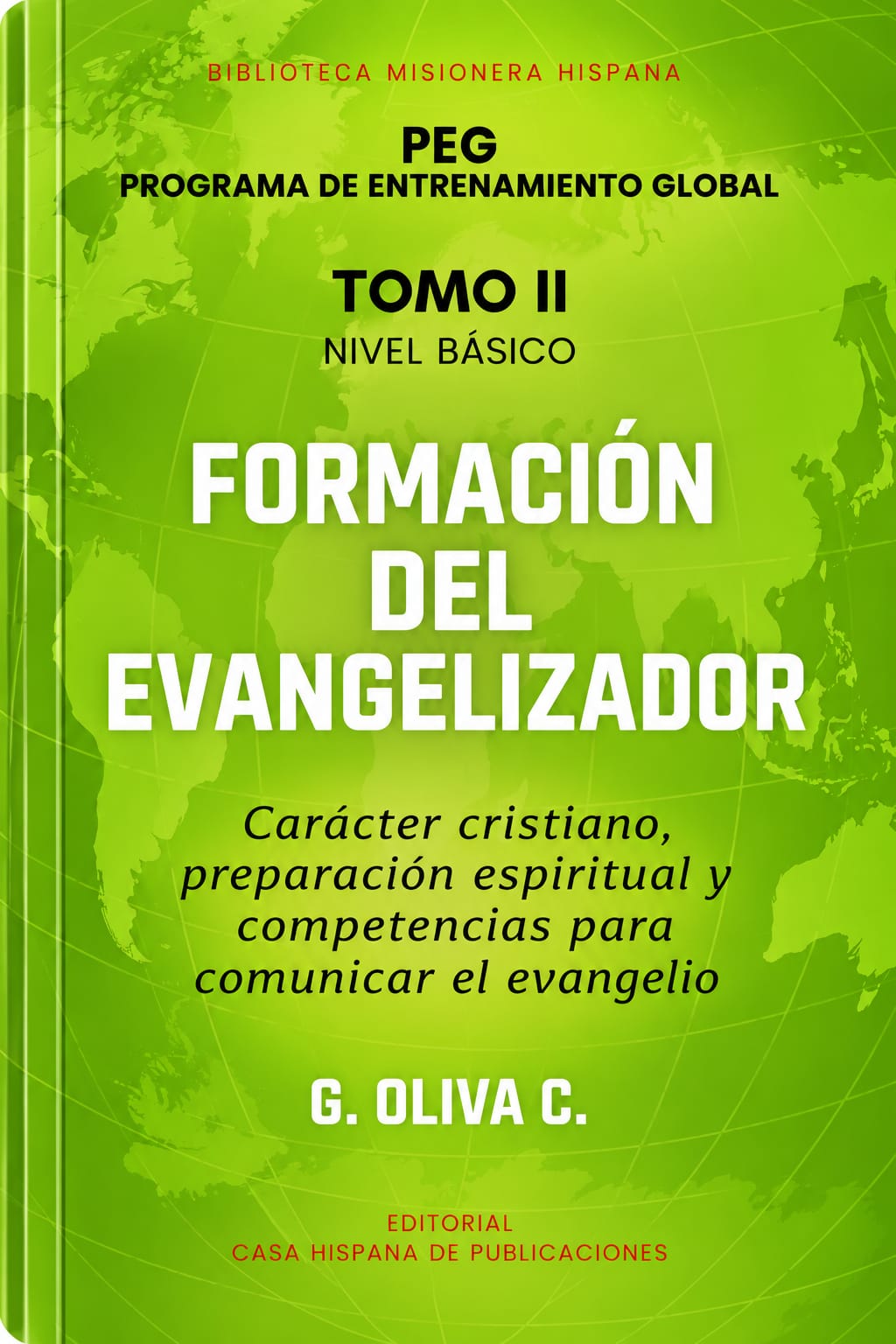
The formation of the evangelist is an essential concern of practical theology, missiology and Christian education, particularly in a contemporary setting marked by profound cultural change, new dynamics of communication, religious pluralism and growing ethical demands regarding the public presence of communities of faith. The task of evangelisation cannot be understood solely as the verbal transmission of doctrinal content, nor reduced to the mastery of methods designed to persuade particular interlocutors. From a biblical and theological perspective, to evangelise is to take part in the mission of God through a witness that brings together spiritual conviction, knowledge of the Scriptures, personal integrity, communal responsibility and sensitivity to human realities. Formación del evangelizador: Carácter cristiano, preparación espiritual y competencias para comunicar el Evangelio is conceived as a programme of integral formation that examines the personal, spiritual, ethical and communicative foundations of evangelistic ministry. Its central argument is that the effectiveness of Christian communication cannot be assessed solely on the basis of the evangelist's rhetorical ability or the quantifiable results of his or her activities, but must also be judged by the coherence between the content of the message proclaimed, the maturity of the one who communicates it and the quality of the relationships he or she builds with people and communities. Included as the second volume of the Hispanic Missionary Library, within the Global Missionary Training Programme (PEG), the book represents a formative stage that links the biblical foundations of evangelisation with the progressive development of the competences needed to put it into practice. Whereas the first volume of the collection deals with the theological nature of the Gospel, the Great Commission and the mission of the Church, this second instalment turns its attention to the person of the evangelist, understood as a subject of formation, an agent of witness and a responsible participant in the Christian mission. From this perspective, the work proposes to move beyond instrumental conceptions of evangelistic training, according to which ministerial preparation would consist mainly in memorising doctrinal presentations, mastering conversational techniques or developing public-speaking skills. Although these competences are useful, they fall short when they are not accompanied by a spiritual, ethical, intellectual and relational formation that enables the Gospel to be communicated responsibly. The formation of the evangelist must therefore be understood as a process of integral development that involves the whole person and extends throughout his or her Christian and ministerial life. Christian character as the foundation of evangelistic witness One of the work's main conceptual threads is the relationship between Christian character and the credibility of witness. This relationship is especially relevant in practical theology, since the proclamation of the Gospel does not take place in an abstract space, but through concrete people whose decisions, behaviour and relationships shape the social reception of the message. In the New Testament, the formation of Christian character is bound up with following Jesus Christ, with the transformation of life and with the work of the Holy Spirit. Texts such as Galatians 5:22-23 present the fruit of the Spirit through virtues that include love, patience, kindness, goodness, faithfulness, gentleness and self-control. These dispositions have direct implications for the practice of evangelisation, especially when Christian proclamation takes place amid religious disagreement, cultural tension or human vulnerability. The evangelist's character ought not to be interpreted as a state of moral perfection, but as a permanent disposition towards maturity, integrity and responsibility. Humility, honesty, prudence and the ability to admit mistakes are essential aspects of a formation that seeks to avoid any contradiction between religious discourse and personal conduct. The evangelist's credibility does not rest solely on his or her individual reputation, but his or her behaviour can strengthen or weaken the trust of those who receive the message. From an ethical perspective, this relationship raises a fundamental question: the legitimacy of the means employed in religious communication. Conviction about the truth of the Gospel does not justify emotional manipulation, the abuse of spiritual authority or the exploitation of situations of need to win religious adherence. The formation of character must consequently include critical reflection on power relations, freedom of conscience and the dignity of persons. The evangelist needs to learn that faithfulness to his or her convictions does not require disregarding the autonomy of those he or she speaks with. On the contrary, the responsible communication of the Gospel requires recognising each person's right to ask questions, express disagreement and make free decisions about his or her beliefs. In this way, Christian character becomes a structural component of missiological formation and not merely a set of supplementary moral recommendations. Spiritual preparation and ministerial maturity. The second fundamental dimension of this proposal is the spiritual preparation of the evangelist. In the Christian tradition, the spiritual life is associated with practices such as prayer, the study of the Scriptures, biblical meditation, participation in community, service and pastoral accompaniment. These practices ought not to be understood as automatic mechanisms of evangelistic effectiveness, but as expressions of a sustained relationship with God and of a formative process that shapes the believer's motivations, decisions and responsibilities. Spiritual preparation is particularly important because evangelisation may take place in emotionally demanding circumstances. Rejection, differences of opinion, interpersonal conflict and institutional expectations can produce frustration or exhaustion when the evangelist lacks adequate tools for making sense of these experiences. A mature spirituality should contribute to the development of perseverance, serenity and discernment, preventing the evangelist's identity from depending solely on the visible results of his or her activity. From a theological perspective, the relationship between spirituality and mission finds significant foundations in the ministry of Jesus Christ, in the experience of the first Christian communities and in the New Testament understanding of dependence on the Holy Spirit. Evangelisation cannot be reduced to an activity of individual performance. Taking part in the mission of the Church requires recognising both human responsibility and the spiritual dimension that underpins the Christian understanding of proclaiming the Gospel. This perspective makes it possible to question training models that equate ministerial maturity with the intensity of activities, the number of people contacted or the frequency of public appearances. Spiritual formation must also include recognition of personal limits, the need for rest and the importance of support from the community. The evangelist does not cease to experience emotional needs, family difficulties or processes of learning simply because he or she holds a ministerial responsibility. Such formation therefore requires a balanced understanding of spiritual discipline, integral well-being and shared pastoral responsibility. Biblical and doctrinal knowledge as an essential competence. The responsible communication of the Gospel demands a proper understanding of its content. The evangelist needs to develop biblical and doctrinal knowledge that enables him or her to explain the foundations of the Christian faith, interpret correctly the passages used and distinguish between the central teachings of Christianity and the particular opinions that may accompany its historical expression. Biblical formation is, in this sense, a cross-cutting competence that brings together theology, hermeneutics and evangelistic practice. The centrality of Jesus Christ, the meaning of his death and resurrection, grace, faith, repentance, reconciliation and new life are among the fundamental contents that should guide the preparation of the evangelist. Knowing doctrinal concepts, however, is not necessarily the same as being able to communicate them well. Formation requires developing the skills to explain complex content in understandable language, without distorting its meaning or reducing it to oversimplified expressions. From a pedagogical perspective, this competence involves relating knowledge to communication. The evangelist must learn to organise ideas, identify the essential elements of an exposition, recognise possible difficulties of understanding and answer questions in a well-founded way. Biblical interpretation plays a decisive role here. The use of isolated texts, detached from their literary and historical context, can produce incomplete or mistaken doctrinal presentations. Evangelistic formation therefore needs to incorporate basic principles of hermeneutics, contextual reading and an understanding of the narrative unity of the Scriptures. The aim is not to turn every evangelist into an academic specialist, but to provide sufficient tools for faithful, reflective and responsible communication. Interpersonal communication and the capacity to listen. One of the most significant contributions of contemporary evangelistic formation is the recognition that communicating the Gospel cannot be understood merely as a one-way process. Evangelisation happens through human relationships in which personal experiences, prior knowledge, religious convictions, emotions, cultural contexts and social expectations all come into play. From this perspective, the evangelist needs to develop communicative competences that include oral expression, active listening, asking questions, empathy, interpreting non-verbal language and the ability to sustain respectful conversations. Listening is a particularly important skill because it makes it possible to recognise the needs, concerns and perspectives of one's interlocutors before formulating responses. An evangelist who listens well can better understand the questions that prompt a conversation, avoid hasty interpretations and recognise that people are not simply passive recipients of a religious discourse. Evangelistic communication must seek to hold together doctrinal clarity and interpersonal sensitivity. This requires developing the ability to adapt one's language to the characteristics of those taking part in the conversation, without arbitrarily altering the essential content of the Christian message. Communication also involves recognising the limits of one's own knowledge. Faced with complex questions, the evangelist must be able to admit uncertainty, explore the issues raised more deeply at a later stage and avoid improvised answers that compromise the integrity of his or her witness. From an educational perspective, these competences can be developed through conversation exercises, case analysis, simulations, supervised observation and feedback processes. Practical training should therefore favour a participatory pedagogy that makes it possible to connect theological knowledge with real experiences of communication. Personal testimony and coherence between faith and life. Personal testimony is a significant dimension of Christian evangelisation, particularly because it allows a person to express how religious convictions relate to his or her concrete experience. Testimony, however, ought not to become a narrative designed to produce emotional impact through exaggeration, artificial dramatisation or claims that cannot honestly be sustained. The formation of the evangelist needs to develop criteria for communicating personal experiences with authenticity, prudence and clarity. From a theological perspective, personal testimony does not replace the content of the Gospel, but it can help to illustrate its meaning in the life of the believer. Individual experience must be related to the Scriptures and should avoid presenting itself as a universal model that everyone must reproduce. This distinction becomes especially important when one considers the different paths of conversion, family upbringing and church involvement. The Christian life unfolds through diverse processes, and evangelistic formation must avoid establishing hierarchies of legitimacy based on the extraordinary character of particular religious experiences. The authenticity of testimony finds a fundamental expression in everyday coherence…
Category
- RELIGION AND SPIRITUALITY
- CHRISTIANITY
- THEOLOGY
- MISSIOLOGY
- EVANGELISATION
- FORMATION OF THE EVANGELIST
Rights for this book
We turn publishing rights into international growth, connecting authors and publishers with new markets, new readers and new partners around the world.
Technical details
- Title
- Formación del evangelizador
- Author
- G. Oliva C.
- Imprint
- Grupo Editorial casa Hispana
- Size
- 15x23cms
- Edition
- 1st edition, 2026
- Published in
- Chile
- Year of publication
- 2026
- Available languages
- Spanish, English, German, Portuguese
- Binding
- Paperback with flaps
- Pages
- 455