Description
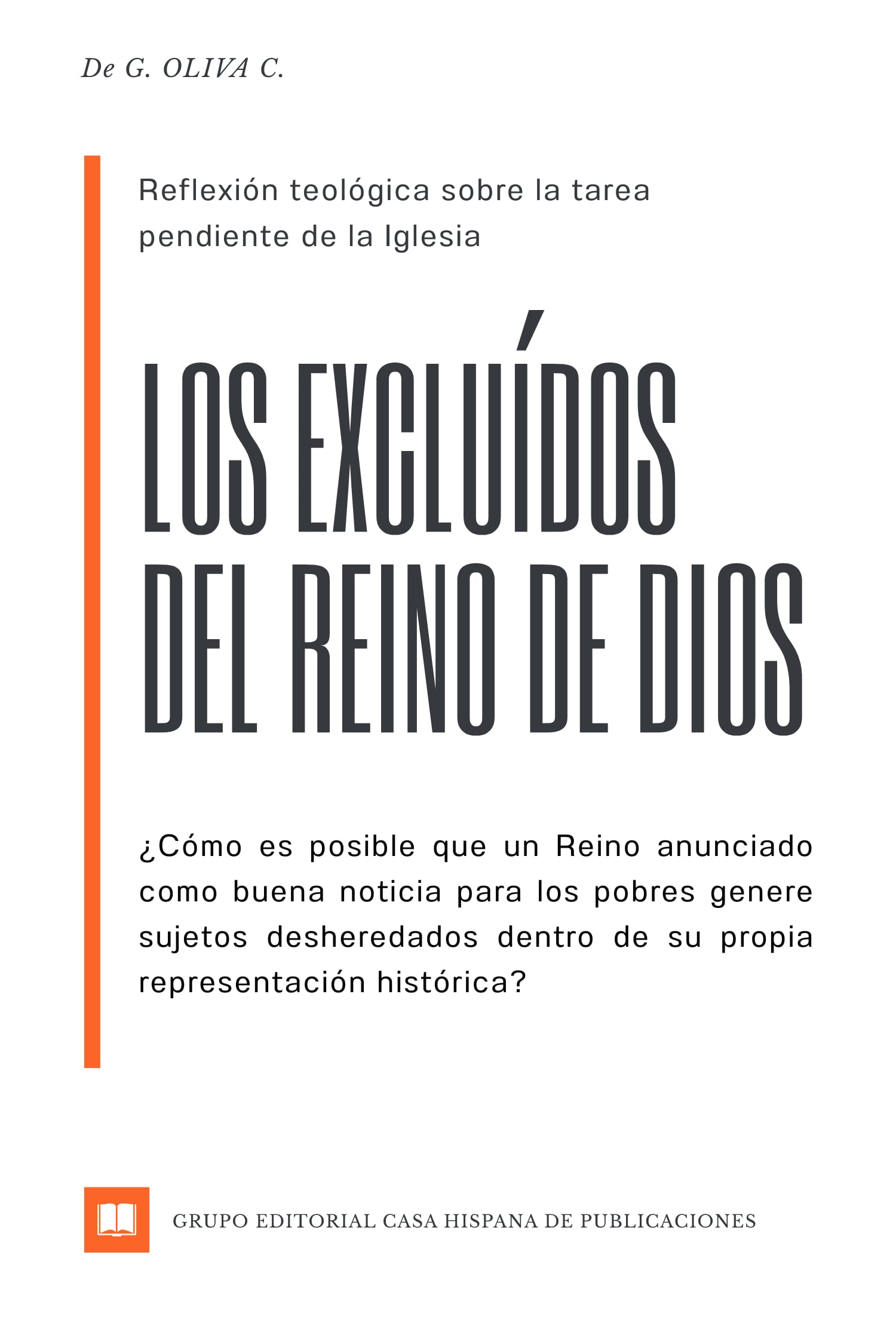
The Excluded from the Kingdom of God is a work of biblical, theological, pastoral and social reflection that examines one of the great tensions running through the history of the Church: the contradiction that arises when communities called to announce the Kingdom of God end up reproducing mechanisms of exclusion, discrimination, indifference or marginalisation towards the very people to whom Jesus Christ showed a particularly significant closeness. The title is deliberately a theological provocation. To speak of those “excluded from the Kingdom of God” is not to claim that God has arbitrarily determined to shut certain categories of human being out of his grace. The phrase seeks to question critically the processes by which societies, institutions and even religious communities can set up human boundaries that end up being wrongly presented as though they were boundaries set by God. This distinction is the starting point of the book. The fundamental question is not only who the excluded are, but also: who excludes them? why are they excluded? what structures produce that exclusion? how did Jesus relate to those placed at the margins? and what responsibility falls to the Church in the face of these realities? The Kingdom of God as a central category. The concept of the Kingdom of God is the theological axis of the study. The proclamation of the Kingdom holds a central place in the ministry of Jesus. It is not simply a reference to the believer's future destiny, but the affirmation of God's sovereign rule breaking into history and confronting sin, injustice, sickness, oppression and rupture. From this standpoint, the author analyses the Kingdom within the familiar eschatological tension of the “already” and the “not yet”. The Kingdom has broken in with Jesus Christ, yet we still await its consummation. This understanding is decisive, because it prevents Christian salvation from being reduced to an exclusively future experience. If the Kingdom has begun to be manifested in Christ, then it has consequences for the way the Christian community understands dignity, justice, mercy, reconciliation, community and mission. Jesus and the excluded. The book finds its principal interpretative reference in the person and the ministry of Jesus Christ. The Gospels repeatedly present Jesus drawing near to people whose social, religious, economic, moral or physical condition could place them at the margins of certain structures of his time. The poor, the sick, people considered unclean, foreigners, socially vulnerable women, public sinners and other figures appear in the gospel narratives as recipients of attention, mercy, restoration and calling. This closeness does not mean that Jesus regarded sin, repentance or moral transformation as irrelevant. It is precisely here that the author introduces a theologically necessary distinction: inclusion does not mean the absence of transformation. Jesus receives, dignifies, forgives and restores, but he also calls to discipleship. Grace opens the door; it does not declare the transformation of a life unnecessary. Dignity before social condition. One of the anthropological foundations of the book lies in the doctrine of the Imago Dei. The fundamental dignity of a person does not derive from their wealth, nationality, education, migration status, ethnic belonging, productive capacity or social standing. It derives from their human condition before God. This conviction allows the author to develop a theological anthropology of dignity. When a person is reduced solely to the category of poor, migrant, Indigenous, sick, prisoner, foreigner or marginalised, there is a risk that their human identity will be subordinated to one particular condition. The Christian gaze must make the opposite movement: before it observes the category, it recognises the person. The poor occupy a particularly prominent place within the study. Scripture contains a persistent concern for those who experience poverty and vulnerability. The Law, the Prophets, the Gospels and the apostolic church contain calls bound up with justice, generosity, care and solidarity. The author avoids idealising poverty, however. Poverty is not automatically a virtue, nor does it necessarily make a person morally superior. It is frequently a condition bound up with want, vulnerability and limited opportunity. Pastoral responsibility consists in accompanying the poor without paternalism. This means moving beyond models in which vulnerable communities are merely the recipients of assistance, and advancing towards processes of dignification, participation, formation and human development. The foreigner and the migrant The biblical figure of the foreigner acquires particular currency in the face of contemporary migration. Migration confronts millions of people with the loss of family networks, precarious work, discrimination, language barriers and cultural uprooting. The book does not claim to resolve the technical complexity of migration policy by means of biblical texts. It does, however, establish an inescapable theological principle: no discussion of migration should erase the humanity of the migrant. Here the Church has an extraordinary pastoral opportunity to develop hospitality, accompaniment, community integration and spiritual care. Indigenous peoples and historical exclusion. In the Latin American context, The Excluded from the Kingdom of God pays particular attention to Indigenous peoples. The history of Latin America compels us to acknowledge processes of colonisation, territorial displacement, cultural discrimination, linguistic loss and various forms of exclusion. The book also examines critically the historical part played by Christianity. In certain contexts, evangelisation was bound up with processes of cultural imposition through which European practices were presented as though they were indispensable components of the Gospel. The author considers it necessary to recover a fundamental distinction: to evangelise does not mean to westernise. The Gospel can meet cultures without necessarily demanding that they disappear. This outlook leads towards an intercultural missiology, in which the Church learns not only to speak but also to listen. The sick and the vulnerable. The ministry of Jesus shows a remarkable closeness to the sick. Illness can generate not only physical suffering but isolation, impoverishment and stigma. Christian pastoral care needs to recover an integral understanding of care. To accompany means being present even when there is no immediate solution. The Church should not measure the worth of people by their productivity or capability. A truly Christian community needs to have room for fragility. The imprisoned. The book also takes in the reality of those deprived of their liberty. Crime requires accountability, and justice has a necessary function. Yet the status of a convicted person does not automatically cancel human dignity. Prison chaplaincy is one of the settings in which the proclamation of grace, repentance, restoration and hope takes on particular force. Christianity holds that a person can be confronted with the consequences of their actions and, at the same time, be regarded as capable of transformation. This tension between justice and restoration runs through the analysis. Women and social exclusion. The study likewise examines different historical and contemporary forms of vulnerability experienced by women. The Gospels present numerous encounters between Jesus and women in contexts where their situation could be conditioned by particular social structures. The book uses these narratives to reflect on dignity, protection, participation and community. The challenge for the Church is to ensure that its pastoral structures do not reproduce violence, abuse, invisibility or discrimination. Children and those made invisible. The attention Jesus gave to children provides a further point of reflection. In societies where worth can be tied to power, influence or productivity, childhood is a reminder that dignity does not depend on what a person can offer in return. The care of children and adolescents is therefore a fundamental responsibility of the Church. Protection, formation, the prevention of abuse and safe environments must form part of any contemporary pastoral ecclesiology. Religious exclusion. One of the most demanding parts of the book concerns the exclusion produced within religious spaces themselves. The community that announces grace can, paradoxically, develop mechanisms through which certain people come to feel that there is no place for them to draw near. The author examines critically the legalism, spiritual elitism, social discrimination and other attitudes capable of turning the Church into a closed community. A profoundly pastoral question arises here: can a Church preach that Christ receives the sinner and at the same time build communities the sinner is afraid to enter? The question does not imply doing away with the doctrine of sin. It implies asking how truth and grace are to be communicated at one and the same time. Grace without relativism. The book seeks to maintain a fundamental theological tension. A Christian pastoral practice of inclusion cannot be built by eliminating all doctrinal or moral content. But neither can truth be defended through humiliation, contempt or the exclusion of the person. Jesus Christ once again provides the paradigm. Grace does not make sin irrelevant. Truth does not make mercy unnecessary. A faithful Church therefore needs to learn to hold together: truth and grace;conviction and mercy;repentance and restoration;holiness and hospitality. From assistance to dignification. Another important contribution of the study is its questioning of a purely welfare-based pastoral practice. Giving food to the hungry has value. But the Church also needs to ask about the conditions that produce hunger. Accompanying the migrant is necessary. But it is also necessary to contribute to their integration. Visiting the prisoner is biblical. But so too can be accompanying processes of reintegration. The author thus proposes moving from a pastoral practice of assistance towards a pastoral practice of dignification and transformation. The excluded as subjects of mission. This shift means abandoning an understanding in which vulnerable people are merely the objects of mission. They can also become its active subjects. A poor person can evangelise. A migrant can plant churches. An Indigenous community can develop theological reflection. A restored person can accompany others. This outlook profoundly alters pastoral structures. The Church does not only minister to the excluded. It is called to build community with them. A Church from the peripheries. The Excluded from the Kingdom of God proposes recovering an ecclesiology able to move out towards the peripheries. This does not mean abandoning the centre of society or idealising the margins. It means recovering the movement observable in the ministry of Jesus: drawing near to people and places that others consider secondary. A Church of the peripheries does not always wait for people to come to its buildings. It goes out to find them. This movement turns pastoral care into mission. The Latin American challenge. The reflection acquires particular depth within Latin America and the Caribbean. The continent continues to face inequality, poverty, migration, violence, discrimination, territorial conflict and many forms of vulnerability. In this context, the author puts a question directly to the Latin American Church: what does it mean to announce the Kingdom of God in societies where millions of people experience different forms of exclusion? The answer cannot be reduced to social programmes alone. It requires a transformation of the Church's own understanding of itself. The Church and structures of power. The book also examines critically the relationship between Church and power. When the Christian community draws too close to structures of prestige, wealth or influence, it runs the risk of beginning to view society from above. The Gospel constantly compels it to recover the perspective of those who hold less power. This does not mean automatically regarding anyone who holds authority or resources as corrupt. It means remembering that power needs accountability and the vulnerable need protection. The prophetic voice of the Church depends in part on its capacity to maintain that independence. Integral mission. Missiology is another of the great foundations of the book. The author understands that evangelisation and social responsibility should not be set against each other as incompatible options. The Church proclaims the Gospel and serves. It forms disciples and it feeds. It preaches reconciliation and works for it. It announces eternal hope and accompanies present suffering. This integration is the essence of integral mission. The pastoral care of presence. One of the most significant pastoral contributions of the book is its recovery of the value of presence. Not every form of suffering can be resolved. There are losses that no human intervention can immediately reverse. In such situations the Church can offer something profoundly Christian: to be there. To be there with the one who weeps. To be there with the one who has lost. To be there with the one who has migrated. To be there with the one who has been rejected. To be there with the one who is trying to rebuild a life. Presence can become a concrete expression of pastoral incarnation. A Church that listens. The author gives equal importance to listening. The Church tends to understand its mission chiefly in terms of what it has to say. Yet responsible pastoral practice needs to hear the questions before it offers answers. To listen to stories. To listen to wounds. To listen to communities. To listen to cultures. To listen to generations. Listening does not replace proclamation. It prepares it and makes it human. The prophetic dimension. The book bears directly on the understanding of the prophetic role of the Church. A Church close to the excluded inevitably begins to observe realities that can remain invisible from privileged positions. Closeness produces knowledge. And that knowledge generates responsibility. The prophetic Church must then be able to denounce whatever destroys dignity and to announce alternatives grounded in the values of the Kingdom. But its denunciation will only be credible when it is accompanied by presence, service and consistency. Eschatology and hope. Eschatology finally provides the horizon of the book. The Church cannot wholly eliminate poverty, injustice, sickness or death by its own efforts. The Kingdom still awaits consummation. Yet this limitation does not justify indifference. Precisely because it awaits a reality in which God will make all things new, the Church is called to offer anticipatory signs of that restoration. Every act of reconciliation, dignification, justice, care and mercy can become a provisional witness to the Kingdom for which it hopes. The author's rigour and contribution. One of the principal contributions of The Excluded from the Kingdom of God lies in its effort to integrate biblical exegesis, Christology, ecclesiology, missiology, theological anthropology, social ethics, contextual theology and eschatology within a single reflection. The author seeks to avoid both an exclusively sociological reading of Christianity and a spiritualisation that ignores concrete human realities. His proposal is to keep Jesus Christ and the Kingdom of God as the interpretative centre. From there he examines poverty, migration, Indigenous peoples, vulnerability, discrimination and different forms of exclusion. Theological rigour also demands acknowledging that these realities are complex. No social category can wholly account for a person, and no human group should be idealised. Christian commitment to the excluded does not arise from regarding those who live at the margins as morally superior. It arises from recognising their human dignity and the biblical witness to the justice, mercy and grace of God. The pastoral contribution of the book. In pastoral terms, the book poses a particularly significant challenge to pastors, leaders, missionaries, theology students and Christian communities. The question is not merely: who attends our Church? The deeper question is: who cannot reach it? Who feels unworthy to enter? Who thinks they will not be received? Who has been wounded by a religious community? Who remains invisible? Who needs the Church to go out and look for them? These questions move the reflection from statistics to persons. The Excluded from the Kingdom of God is, in the end, a book about grace, dignity, mission, justice, mercy and hope. Its fundamental thesis can be summed up in a single conviction: the Church cannot seriously proclaim the Kingdom of God while it remains indifferent to the people society places at its margins. But the book goes further still. The Church must ask whether it has itself built certain boundaries that Christ never asked it to build. Here lies what is perhaps the most uncomfortable and most necessary question in the whole work: how many of the people we have placed outside might be far closer to the Kingdom of God than we imagine? The challenge is not to build a Church without truth so that everyone can be included. Nor is it to defend the truth by building a Church that no wounded person can approach. The challenge is to recover the model of Jesus Christ: a community where truth can be announced without ceasing to love, where sin can be confronted without destroying dignity, where repentance leads to restoration and where grace opens paths towards a new life. The Excluded from the Kingdom of God therefore speaks directly to the contemporary Church, and to the Latin American Church in particular, calling it to recover a mission able to look towards its own peripheries. For the Gospel does not lead only towards church buildings. It also leads towards the streets, the prisons, the hospitals, the borders, Indigenous territories, impoverished communities, migrants, the wounded and every place where someone is still waiting to be looked upon as a person. There, in the midst of those realities, the Church encounters once again one of the essential questions of its mission: who would Jesus draw near to? And that question inevitably compels another: towards whom should the Church be walking today?…
Category
- RELIGION
- CHRISTIANITY
- CHRISTIAN THEOLOGY
- BIBLICAL THEOLOGY
- THE KINGDOM OF GOD
- JUSTICE, MERCY AND EXCLUSION
- HUMAN DIGNITY AND RESTORATION
- PASTORAL THEOLOGY
- SOCIAL PASTORAL CARE
- THE POOR AND THE EXCLUDED
- VULNERABLE COMMUNITIES
- ACCOMPANIMENT AND DIGNIFICATION
- ECCLESIOLOGY
- CHURCH AND SOCIETY
- THE CHURCH AND THE PERIPHERIES
- THE SOCIAL RESPONSIBILITY OF THE CHURCH
- INCLUSION, COMMUNITY
- MISSIOLOGY
- INTEGRAL MISSION
- EVANGELISATION
- MISSION AMONG VULNERABLE COMMUNITIES
- SOCIAL TRANSFORMATION
- CONTEXTUAL THEOLOGY
- LATIN AMERICAN THEOLOGY
- POVERTY AND EXCLUSION
- INDIGENOUS PEOPLES AND MIGRATION
- HUMAN RIGHTS
Rights for this book
We turn publishing rights into international growth, connecting authors and publishers with new markets, new readers and new partners around the world.
Technical details
- Title
- Los excluidos del Reino de Dios
- Author
- G. Oliva C.
- Imprint
- Grupo Editorial casa Hispana
- Size
- 15x23cms
- Edition
- 1st edition, 2024
- Published in
- Chile
- Year of publication
- 2025
- Available languages
- Spanish, English, German, Portuguese
- Binding
- Paperback with flaps
- Pages
- 586