Description
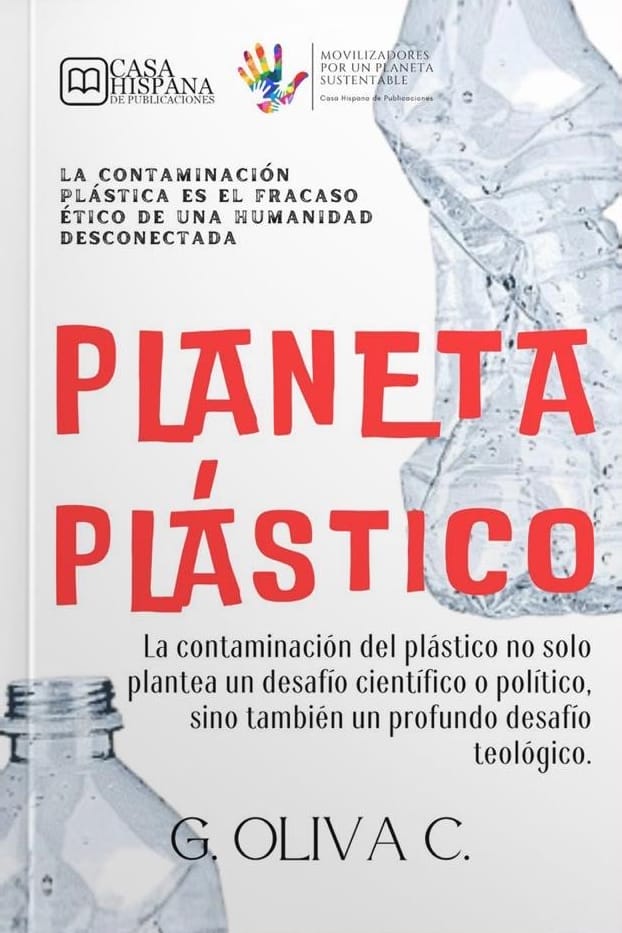
Plastic pollution constitutes one of the most visible and complex environmental problems of our time, because it represents much more than the accumulation of bottles, bags, packaging and objects abandoned in streets, beaches, rivers or landfills; behind every piece of plastic waste there is a long chain that begins with the extraction of raw materials, continues through industrial processes, manufacturing, distribution, consumption and use, and ends in reuse, recycling, recovery, final disposal or release into the environment; to speak of a plastic planet therefore means reflecting on a society that has incorporated these materials into practically every sphere of contemporary life, from food, medicine, transport, construction, agriculture, technology and telecommunications to household products, textiles and packaging, while recognising at the same time that the very properties that made plastic an extraordinarily useful material, such as its strength, lightness, versatility, durability and relatively low cost, have become a central part of the problem when products conceived to be used for very brief periods remain for long periods in natural systems. From the author's perspective the fundamental problem does not lie simply in the existence of plastic, because these materials fulfil important functions and in certain sectors can provide sanitary, technological, economic and logistical advantages that are difficult to replace immediately; the real challenge lies in the scale of production, the design of certain products, the expansion of disposable items, the culture of short-lived consumption, the deficiencies of collection and treatment systems, the loss of potentially recoverable materials and especially the persistent release of waste into terrestrial, river, coastal and marine ecosystems; for this reason a responsible reflection needs to move beyond the simplistic claim that all plastic is necessarily negative and concentrate on understanding where, how and why these materials become pollution. The history of plastic represents one of the great paradoxes of modern industrial development; synthetic materials capable of replacing heavier, more expensive or scarcer products allowed important advances in food preservation, medical devices, insulation, construction, transport and multiple industries; however, mass production accompanied by linear systems of consumption progressively transformed a technological innovation into an environmental challenge of global dimensions; the contradiction becomes evident when a material designed to endure for prolonged periods is used to manufacture objects whose useful life may be reduced to minutes; a bag, a wrapper, a bottle, a cup or a piece of cutlery may fulfil their function quickly, but the material of which they are made may remain much longer after having lost its original usefulness. This difference between useful life and environmental persistence constitutes one of the keys to understanding the crisis; when millions of short-use products enter insufficient waste systems every day, the likelihood increases that a portion ends up outside controlled circuits; the problem intensifies in territories where collection is incomplete, landfills are poorly managed, informal dumps exist or waste can be carried by wind, rain, ravines, canals and rivers towards other ecosystems. Marine pollution represents one of the best-known expressions of the problem, but the oceans are frequently the final destination of waste originally generated on land; rivers and drainage systems can carry materials from inland cities to estuaries and coasts, showing that protecting the ocean begins long before reaching the beach. Waste abandoned in urban spaces can travel long distances driven by hydrological and meteorological systems; a bottle irresponsibly discarded far from the sea may eventually join a watercourse and move towards coastal environments. This connectivity obliges us to understand river basins as fundamental units for pollution prevention. The oceans also receive waste from maritime activities, fishing, shipping, tourism and coastal operations; nets, ropes, lines and other gear lost or abandoned can continue capturing organisms for periods after their use, a phenomenon known as ghost fishing. This type of pollution shows that the marine plastic problem has multiple sources and that solution strategies need to identify each one correctly. Not all ocean pollution comes from the same sector, and indiscriminately blaming consumers, fishers, industries or cities would prevent the development of effective responses. The author's research considers it essential to maintain this precision, because an environmental policy can only be effective when it adequately understands the causes it seeks to change. The accumulation of plastic waste on beaches also produces ecological, landscape, tourism and economic impacts; coastal communities may need to invest significant resources in clean-up, while activities associated with recreation, fishing and tourism may be harmed by degraded environments. Prevention must therefore occupy a priority position within any comprehensive policy against plastic pollution. Once certain waste enters the environment, fragmentation processes begin, produced by solar radiation, abrasion, temperature changes, waves and other physical mechanisms. Plastic does not necessarily disappear when it ceases to be seen as a complete object; it may progressively fragment into smaller particles. Here the problem of microplastics arises, a term used to describe small plastic particles currently present in numerous environments. Some microplastics are produced directly in small sizes, while others originate through the degradation and fragmentation of larger objects. This dispersion constitutes one of the scientifically most relevant dimensions of contemporary pollution, because it transforms an initially visible problem into another that is much more difficult to remove and control…
Category
- PLASTIC POLLUTION
- PLASTIC PLANET
- MICROPLASTICS
- PLASTIC WASTE
- MARINE POLLUTION
- OCEANS
- MARINE ECOSYSTEMS
- BIODIVERSITY
- ENVIRONMENTAL DEGRADATION
- WASTE MANAGEMENT
- RECYCLING
- CIRCULAR ECONOMY
- SINGLE-USE PLASTICS
- RESPONSIBLE CONSUMPTION
- SUSTAINABLE PRODUCTION
- SUSTAINABLE DEVELOPMENT
- ENVIRONMENTAL JUSTICE
- ENVIRONMENTAL RESPONSIBILITY
- INTEGRAL ECOLOGY
- CARE OF CREATION
Rights for this book
We turn publishing rights into international growth, connecting authors and publishers with new markets, new readers and new partners around the world.
Technical details
- Title
- Planeta plástico
- Author
- G. Oliva C.
- Imprint
- Grupo Editorial casa Hispana
- Size
- 15x23cms
- Edition
- 1st edition, 2025
- Published in
- Chile
- Year of publication
- 2026
- Available languages
- Spanish, English, German, Portuguese
- Binding
- Paperback with flaps
- Pages
- 454