
Description
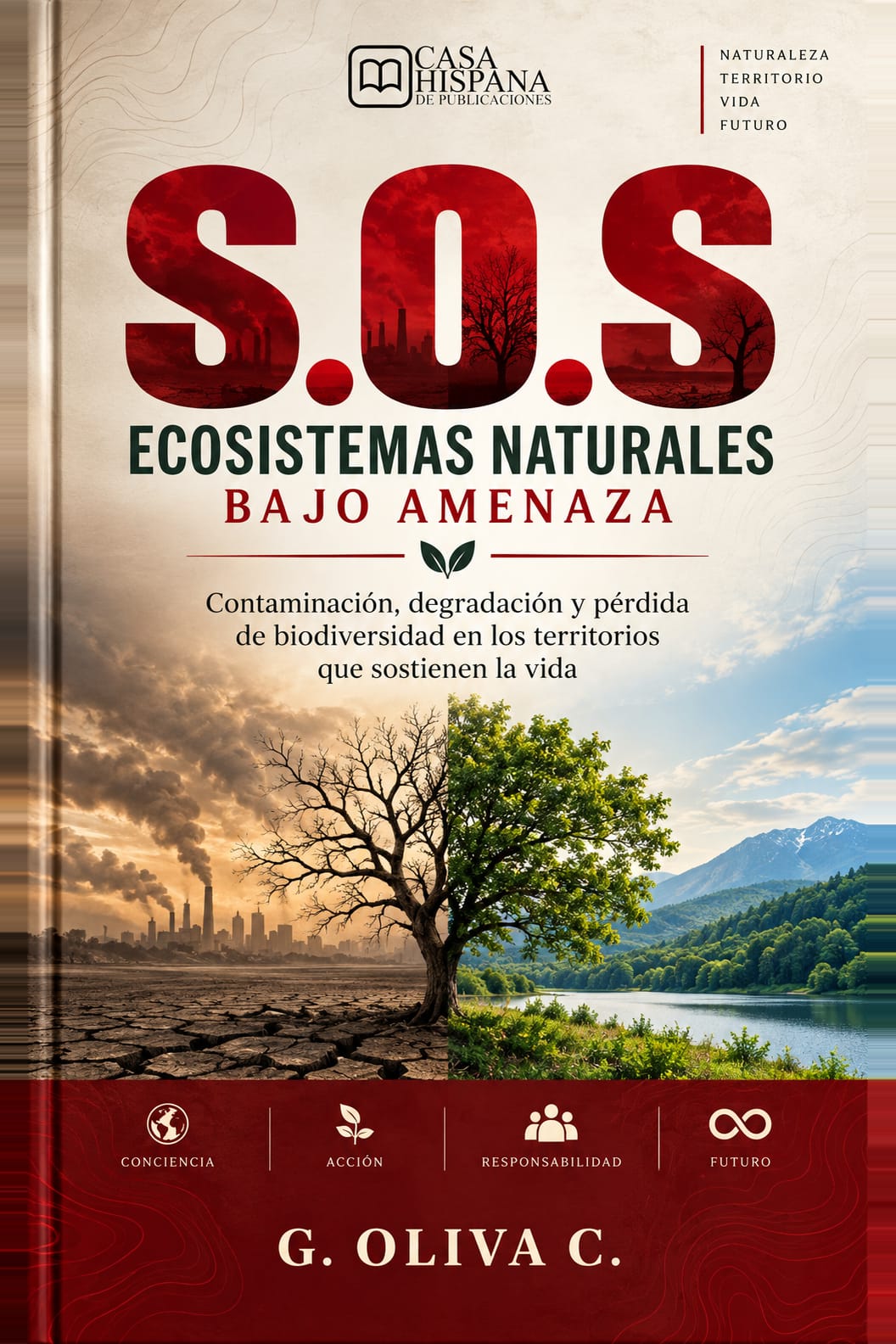
The ecological threats facing rivers, river basins, lakes, forests and wetlands constitute one of the deepest expressions of the contemporary environmental crisis, because these ecosystems do not function as isolated units but as interdependent components of territorial systems that sustain biodiversity, regulate the water cycle, store carbon, protect soils, moderate certain extreme events, provide food and raw materials and maintain innumerable economic, social and cultural activities; understanding their deterioration therefore requires abandoning a fragmented view of nature and recognising that what happens in a forest may later affect a basin, that the transformation of a basin may modify a river, that alterations of a river may have repercussions on lakes, wetlands, estuaries and coastal ecosystems, and that finally these changes return to human societies through changes in water availability and quality, agricultural productivity, food security, environmental risks and general conditions of wellbeing; from the author's perspective this interdependence is the starting point for adequately understanding the problem, because protecting a river without protecting its basin, protecting a wetland without considering the flows that feed it, or conserving a forest while ignoring the activities carried out in the surrounding territory may produce partial responses to ecological processes that function as integrated systems. Rivers represent much more than natural channels through which water flows; they are ecological corridors capable of connecting mountains, valleys, forests, wetlands, lakes, estuaries and oceans, transporting water, sediments, nutrients, organic matter and organisms, and simultaneously sustaining human communities that depend on them for supply, consumption, agriculture, production, energy, recreation, culture and economic activities; this multiplicity of functions explains why the degradation of a river can trigger consequences that far exceed the place where the impact originally occurred; pollution constitutes one of the main threats and may come from different sources, among them industrial discharges, insufficiently treated wastewater, agricultural runoff, solid waste, mining activities, hydrocarbon spills and urban pollution, but it is important to distinguish these sources, because not all pollutants behave in the same way or produce the same effects; nutrients such as nitrogen and phosphorus can alter biological processes, certain metals may present toxicity depending on their concentration and chemical form, excess sediments can modify habitats and pathogenic microorganisms may represent health risks; for this reason simply speaking of polluted water is insufficient from a scientific perspective; environmental management needs to know what substance is present, in what concentration, what its origin is, how it moves within the system and which organisms or populations may be exposed. The research developed by the author considers that one of the greatest challenges related to water pollution consists precisely in understanding that what is discharged upstream can generate consequences many kilometres downstream; a basin connects administratively separate territories, and this characteristic makes water management an ecological but also an institutional question; a municipality, an industry, an agricultural operation or a city may generate effects that later appear in other places; for this reason integrated basin management constitutes a particularly important tool, because it makes it possible to observe the hydrographic system as a functional unit and not simply as a sum of administrative jurisdictions; water quality depends on what happens throughout the territory that drains into it; protecting headwaters, maintaining riparian vegetation, controlling erosion, improving wastewater treatment, regulating discharges and adequately managing waste may be as important for the conservation of a river as interventions carried out directly within its channel. Agriculture constitutes an indispensable activity for food security and should not automatically be presented as an enemy of ecosystems; however, certain practices can increase pressure on waters when there is excessive or inadequate use of fertilisers, pesticides or irrigation systems; nutrients not absorbed by crops can move through runoff or infiltration, while plant protection products can reach bodies of water depending on their properties and conditions of application; the answer does not necessarily consist in opposing agricultural production and conservation, but in developing practices capable of reducing losses, improving efficiency, maintaining vegetation strips, protecting watercourses, optimising fertilisation, controlling erosion and using precision technologies where appropriate; an environmentally sustainable agriculture needs to understand that conserving soil and water also means protecting its own productive base. Wastewater represents another significant challenge, especially in territories where urban growth exceeds the capacity of sanitation infrastructure; when treatment systems are non-existent, insufficient or function poorly, they can introduce organic matter, nutrients, microorganisms and various pollutants into rivers, lakes or coastal environments; investing in sanitation is therefore simultaneously an environmental policy, a health policy and a human development policy; the protection of aquatic ecosystems often begins with infrastructure that may be barely visible to citizens, such as treatment plants, sewerage networks, monitoring, drainage systems and institutional maintenance, but whose environmental benefits are fundamental. Dams and other hydraulic works constitute a particularly complex example of the relationship between development and conservation; they can provide electricity, water storage, flow regulation, irrigation or supply and in certain contexts represent strategic infrastructure, but they can also modify river connectivity, sediment transport, water temperature, species migration and ecological dynamics upstream and downstream; for this reason a serious evaluation needs to avoid both the automatic acceptance and the automatic rejection of any project; the relevant question consists in determining what its benefits are, what its impacts are, what alternatives exist, what mitigation measures are technically possible and how costs and benefits are distributed among territories and communities; the fragmentation of rivers can be especially significant for species that need to move during different stages of their life cycle, while the retention of sediments can alter geomorphological processes downstream. Excessive water extraction constitutes another important pressure; when human demands exceed for prolonged periods the capacity of the system to maintain its ecological functions, flows may decline, and with them habitats, temperatures, concentrations of pollutants and the availability of environments for different organisms may be transformed; water management therefore needs to balance human consumption, agriculture, industry, energy and ecological needs; recognising environmental flows means understanding that a certain quantity of water must remain within the system to maintain fundamental ecological processes; this does not eliminate economic needs, but it obliges us to incorporate them within real hydrological limits. Erosion and sedimentation show particularly clearly the connection between land and water; when vegetation cover disappears or soil is managed inadequately, rains can carry greater quantities of particles towards ravines, rivers, lakes and wetlands; sediment is naturally part of river systems and should not automatically be regarded as pollution; however, important alterations in its quantity, distribution or composition can modify habitats, reduce the depth of certain bodies of water, affect organisms and transport pollutants associated with particles; conserving soil within a basin therefore means simultaneously protecting terrestrial and aquatic ecosystems. Forests play a central role within this relationship, because they help to protect soils, intercept precipitation, maintain habitats, store carbon, sustain biodiversity and take part in hydrological cycles, but it is necessary to avoid excessively simplified statements about their relationship with water, because the specific effects depend on climate, soil, species, topography, scale and management; what can be affirmed in general is that the extensive loss of forest cover modifies important ecological processes and can increase vulnerability to erosion, habitat fragmentation and loss of biodiversity. Deforestation constitutes one of the most important threats when natural forests are permanently transformed for agriculture, urban expansion, infrastructure, resource extraction or other uses; the loss is not reduced to individual trees; ecological structures developed over long periods disappear, corridors are fragmented, microclimates are modified, biological communities are altered and carbon reserves stored in vegetation and soil may be released; the magnitude of the impact depends on the ecosystem and the type of transformation, but the conservation of natural forests remains a priority, because subsequently restoring a complex ecosystem does not necessarily mean immediately recovering what was destroyed. This distinction between natural forest, forest plantation and restoration is important; a plantation can produce timber, store carbon and provide certain functions, but it does not necessarily reproduce the structure, composition and biodiversity of an old natural forest; for this reason simply measuring the area covered by trees can hide fundamental ecological differences; environmental management needs to observe quality, connectivity, species diversity, structure and ecosystem functions in addition to territorial extent…
Category
- RIVERS
- RIVER BASINS
- LAKES
- FORESTS
- WETLANDS
- ECOSYSTEMS
- BIODIVERSITY
- WATER RESOURCES
- WATER POLLUTION
- ENVIRONMENTAL DEGRADATION
- DEFORESTATION
- CLIMATE CHANGE
- WATER SECURITY
- ENVIRONMENTAL CONSERVATION
- ECOLOGICAL RESTORATION
- PROTECTION OF ECOSYSTEMS
- RIVER BASIN MANAGEMENT
- ENVIRONMENTAL JUSTICE
- SUSTAINABLE DEVELOPMENT
- INTEGRAL ECOLOGY
Rights for this book
We turn publishing rights into international growth, connecting authors and publishers with new markets, new readers and new partners around the world.
Technical details
- Title
- S.O.S ecosistemas naturales bajo amenaza
- Author
- G. Oliva C.
- Imprint
- Grupo Editorial casa Hispana
- Size
- 15x23cms
- Edition
- 1st edition, 2024
- Published in
- Chile
- Year of publication
- 2025
- Available languages
- Spanish, English, German, Portuguese
- Binding
- Paperback with flaps
- Pages
- 463