Description
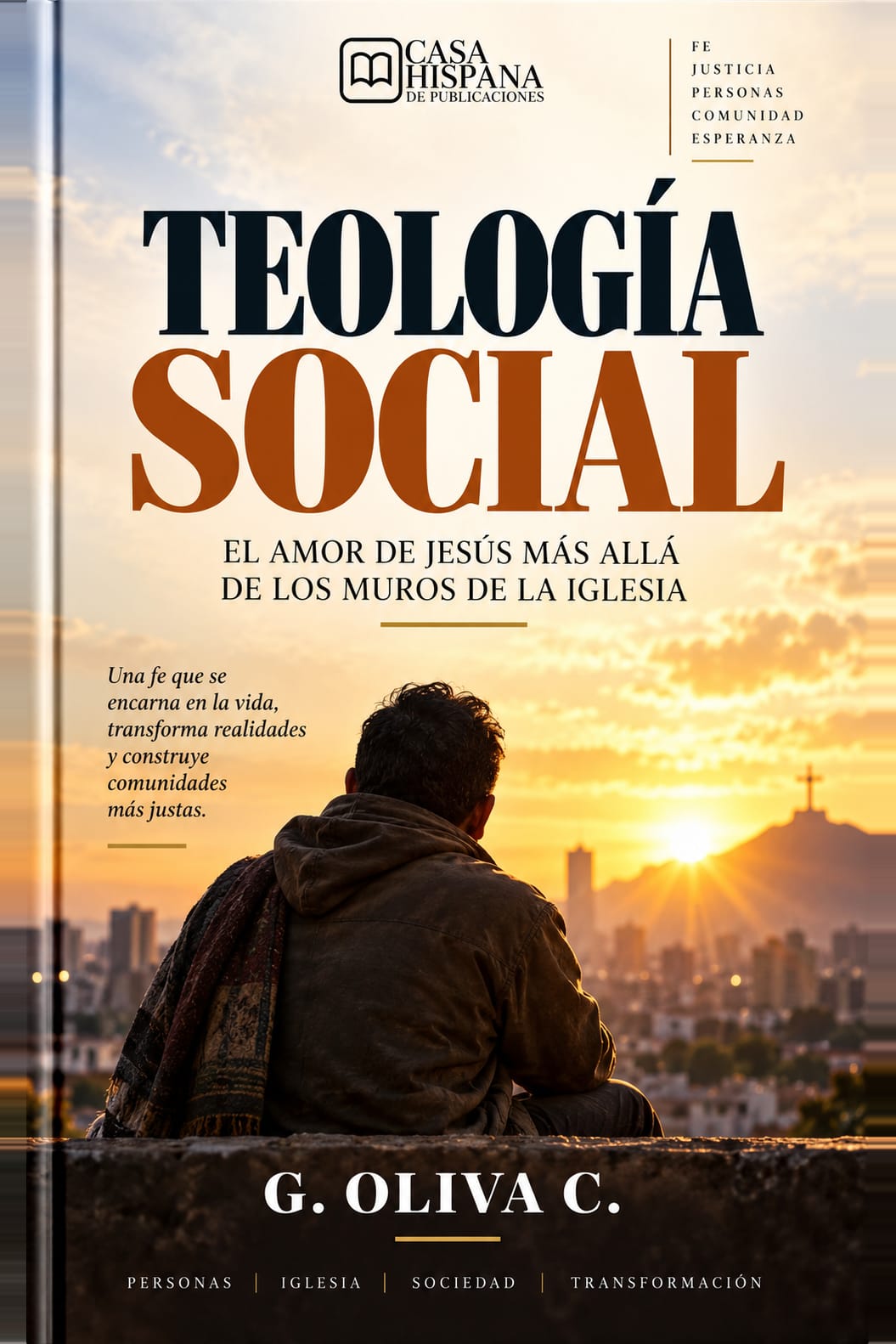
Social theology constitutes a field of Christian reflection that studies the relationship between faith in Jesus Christ and the social, economic, cultural and political realities in which people live, starting from the conviction that the Gospel cannot be reduced exclusively to the private sphere of individual spirituality but has concrete consequences for the way believers understand human dignity, justice, power, the economy, work, poverty, wealth, coexistence, peace, the care of the vulnerable and responsibility towards the common good; from this perspective social theology seeks to establish a permanent dialogue between the Scriptures, the Christian tradition, historical reality and contemporary challenges, asking how faith can guide a responsible presence of the Church within society. One of the fundamental concerns running through this reflection consists precisely in overcoming the artificial separation between faith and daily life; when Christian experience is confined solely to worship, prayer or the internal activities of the religious community, it runs the risk of losing part of its transforming capacity; the Gospel calls the believer to a renewed relationship with God, but that relationship necessarily produces consequences in the way one relates to one's neighbour, manages resources, exercises authority, carries out economic activities, takes part in the community and responds to human suffering. Social theology does not seek to replace the proclamation of the Gospel with an exclusively social programme, nor to turn Christianity into a political ideology; its purpose consists rather in exploring the social consequences of confessing Jesus Christ as Lord and recognising the human being as a creature made in the image of God; this distinction is fundamental because it makes it possible to maintain the centrality of salvation in Christ while recognising that an authentic faith produces visible fruits of justice, mercy, reconciliation, service and responsibility. The biblical foundation of this concern begins with the doctrine of creation; Genesis 1:26-27 presents the human being created in the image and likeness of God; this affirmation provides a theological basis for understanding human dignity, because the worth of a person does not depend exclusively on their wealth, nationality, educational level, productivity, social condition, age, culture or economic capacity; their fundamental dignity is related to their condition as a human creature before God. This understanding has profound social consequences; if all people possess dignity, then no society should regard certain groups as dispensable, inferior or lacking in worth; poverty, illness, disability, migration, ethnic belonging or economic position do not remove human dignity; for this reason social theology examines those structures, attitudes and practices that may deny in daily life what Christian doctrine affirms about the human being. Scripture also develops a persistent concern for those in conditions of vulnerability; the legislation of the Old Testament contains provisions relating to the poor, foreigners, widows, orphans, workers and people in debt, showing that the community life of the people of God was to incorporate principles of justice, responsibility and protection towards those with less capacity to defend their own interests. The prophetic tradition deepens this dimension by repeatedly denouncing the contradiction between religiosity and injustice; the prophets confronted societies in which religious practices could be maintained while exploitation, corruption, violence and abandonment of the vulnerable existed; this critique is especially relevant for social theology because it shows that worship and ethics cannot be completely separated. Micah 6:8 sums up this relationship through the call to do justice, love mercy and walk humbly with God; life before God appears linked to a particular way of relating to others; justice here is not an optional addition to spirituality but a concrete expression of an existence oriented towards God. The ministry of Jesus deepens this perspective still further; Luke 4:18-19 presents his mission through the language of good news for the poor, freedom, restoration and the proclamation of God's favour; this text does not exhaust the meaning of Christ's mission, but it shows that his ministry unfolds within a concrete human reality in which there are impoverished, suffering, marginalised people in need of restoration. Jesus did not carry out his ministry far from the social tensions of his time; he travelled through villages, cities, roads and homes, meeting the sick, the poor, foreigners, tax collectors, socially despised people, religious leaders, workers and families; his proclamation of the Kingdom of God took place within real life and confronted both personal sin and certain forms of exclusion, pride, indifference and religious abuse. Matthew 25:35-40 constitutes an especially significant reference for social theology, because Jesus relates the treatment of people who are hungry, thirsty, foreign, naked, sick or imprisoned to the treatment of Himself; this teaching gives a profound Christological dimension to the care of the vulnerable; serving the needy ceases to be merely philanthropy and can become a concrete expression of Christian faithfulness. The parable of the good Samaritan broadens this responsibility because it breaks social, religious and cultural barriers; in answering the question about the neighbour, Jesus places the emphasis on concrete mercy towards the one who suffers; the neighbour is not only whoever belongs to our group but the one whose need demands a responsible answer. From this perspective social theology understands Christian love as a reality that needs to acquire practical expression; loving one's neighbour does not mean only developing positive feelings towards other people; it may involve feeding, accompanying, educating, protecting, listening, sharing resources, defending dignity, promoting reconciliation and working so that certain conditions of suffering can be transformed. James 2:14-17 formulates this relationship in a particularly direct way by questioning a faith that observes a person's material needs but does not respond concretely to them; the teaching does not affirm that works replace the grace of God, but that a living faith produces visible consequences; Christian spirituality inevitably has an ethical dimension. This integration between faith and action constitutes one of the central contributions of social theology, because it confronts an excessively individualistic understanding of Christianity; personal conversion remains fundamental, but the converted person continues to live within families, communities, economies, institutions and societies; for this reason their spiritual transformation also needs to influence the way they take part in those realities. Justice naturally holds a central place within this reflection, but it needs to be carefully defined from a biblical perspective; it cannot be reduced simply to a political slogan, nor automatically identified with a particular ideology; justice includes dimensions related to righteousness, equity, responsibility, protection of the vulnerable, fulfilment of obligations and the establishment of relationships in which human dignity can be respected. Social theology then asks what it means to act justly within concrete situations: how the worker should be treated, how goods should be administered, what responsibility exists towards those living in poverty, how corruption, discrimination, violence or exploitation should be confronted, and what obligations people, institutions, companies, churches and authorities have regarding the common good…
Category
- THEOLOGY
- SYSTEMATIC THEOLOGY
- CHRISTOLOGY
- CONTEXTUAL THEOLOGY
- LATIN AMERICAN THEOLOGY
- CHRISTIAN EDUCATION
- SPIRITUALITY
- MISSION
- SOCIAL JUSTICE
- PASTORAL THEOLOGY
Rights for this book
We turn publishing rights into international growth, connecting authors and publishers with new markets, new readers and new partners around the world.
Technical details
- Title
- Teología social
- Author
- G. Oliva C.
- Imprint
- Grupo Editorial casa Hispana
- Size
- 15x23cms
- Edition
- 1st edition, 2023
- Published in
- Chile
- Year of publication
- 2025
- Available languages
- Spanish, English, German, Portuguese
- Binding
- Paperback with flaps
- Pages
- 498