Description
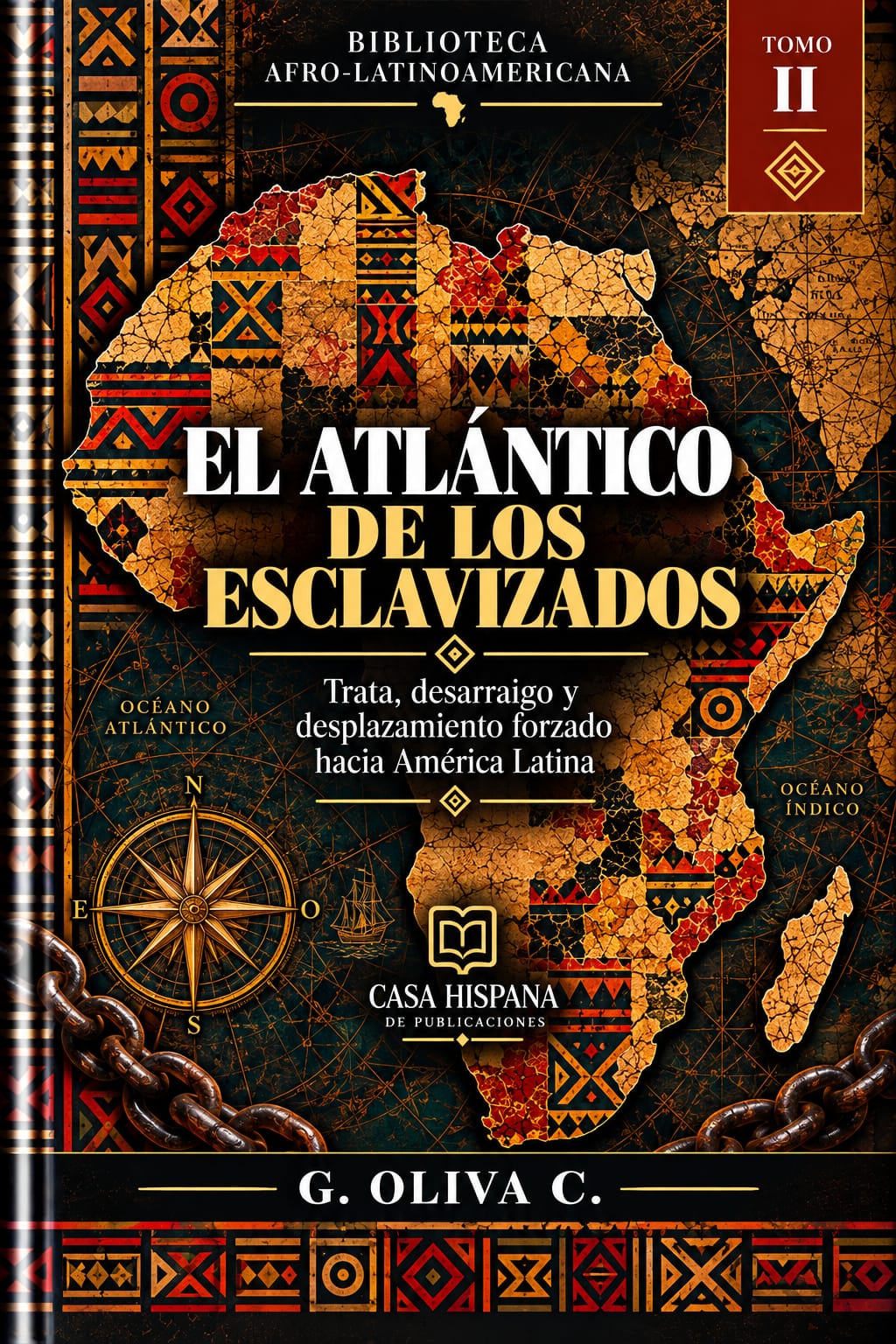
The Atlantic of the Enslaved represents one of the most painful and decisive chapters in the formation of the modern world, because for several centuries the Atlantic Ocean ceased to be merely a geographical space of navigation, exchange and encounter between continents and also became the stage of a gigantic structure of forced human displacement through which millions of African men, women and children were captured, sold, moved, shipped and subjected to different forms of enslavement in the Americas and other Atlantic regions; this process cannot be understood simply as a succession of sea voyages, nor reduced to the generic expression "slave trade", because what circulated within this system was not ordinary merchandise but human beings transformed legally and economically into merchandise through institutions, markets, laws, violence and relations of power, and precisely for this reason the author deliberately uses the expression "Atlantic of the enslaved" to restore historical centrality to the people who suffered that system, recalling that no one was born naturally destined for slavery, but that men, women and children were turned into enslaved persons through concrete processes of capture, coercion, sale, transfer and exploitation. The history developed in Africa Before the Chains makes it possible to understand the magnitude of this rupture, because those who were taken to the Americas did not come from a historical void; they belonged to concrete societies, they had families, languages, territories, memories, knowledge, religiosities, trades, community relationships and experiences prior to captivity; for this reason the Atlantic trade must be analysed not only as a transfer of population but as an immense experience of uprooting; a captured person could simultaneously lose freedom, territory, family ties, political belonging, access to their language, community, everyday landscape, cultural practices and the possibility of deciding their own future; forced displacement destroyed relationships even before the ocean crossing began, and this dimension is fundamental because the violence of the trade began long before the captives were put into the holds of the ships. The estimates built through decades of historical research place at around twelve and a half million the number of Africans embarked in the transatlantic trade and at approximately ten and a half to eleven million those who disembarked alive in the Americas between the sixteenth and nineteenth centuries, although the exact figures vary according to documentary bases, periods, routes and criteria used, and behind this statistical difference lies a devastating human reality: hundreds of thousands of people died during the Atlantic crossing, while others had died previously during captures, marches, internal transfers, confinements and waits on the coasts; for this reason even the extraordinary figures of people embarked do not by themselves represent the totality of the victims produced by the system. But the numbers need humanity. Twelve million is not only a figure. It is an accumulation of interrupted stories. Separated families. Forgotten names. Destroyed childhoods. Affected communities. People moved against their will. When the scale of a tragedy becomes too great, there is the risk that statistics end up hiding precisely what they seek to show. For this reason one of the author's central concerns is to keep two dimensions permanently united. The historical magnitude. And the human experience. We need figures to understand the scale. But we need stories to understand the meaning. The transatlantic trade developed over centuries and changed in routes, actors, ports, African regions of origin, American destinations, goods, legal systems and economic structures; there was therefore no single permanent model from beginning to end; Portuguese, Spanish, British, French, Dutch, Danish and other European actors took part at different moments and scales, while African merchants, authorities, intermediaries and political structures performed diverse functions within certain networks of capture and sale; this complexity must be studied without using it to dilute responsibilities, because recognising the participation of multiple actors does not transform…
Category
- TRANSATLANTIC SLAVE TRADE
- ATLANTIC SLAVERY
- ENSLAVED PEOPLE
- AFRICAN DIASPORA
- ATLANTIC DIASPORA
- UPROOTING
- FORCED DISPLACEMENT
- SLAVE TRADE
- AFRICA
- LATIN AMERICA
- AFRO-DESCENDANTS
- COLONIAL SLAVERY
- RACIALISATION
- AFRO-DESCENDANT RESISTANCE
- MARRONAGE
- ABOLITION OF SLAVERY
- HISTORICAL MEMORY
- AFRO-DESCENDANT IDENTITY
- HUMAN RIGHTS
- AFRO-LATIN AMERICAN HISTORY
Rights for this book
We turn publishing rights into international growth, connecting authors and publishers with new markets, new readers and new partners around the world.
Technical details
- Title
- El Atlántico de los esclavizados
- Author
- G. Oliva C.
- Imprint
- Grupo Editorial casa Hispana
- Size
- 15x23cms
- Edition
- 1st edition, 2026
- Published in
- Chile
- Year of publication
- 2026
- Available languages
- Spanish, English, German, Portuguese
- Binding
- Paperback with flaps
- Pages
- 468