Description
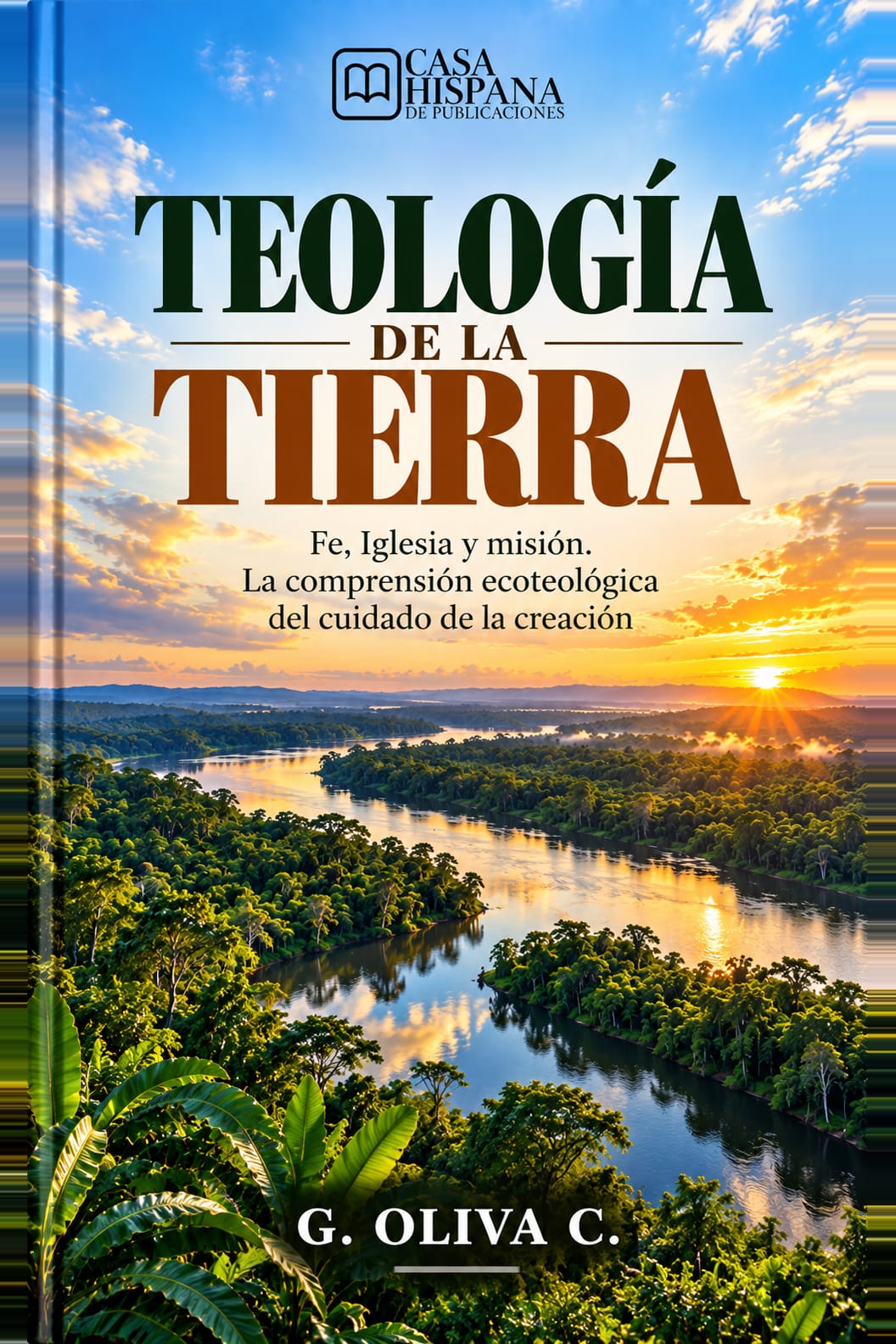
The theology of the land constitutes an approach to Christian reflection that seeks to recover the deep relationship between God, humanity and creation, understanding the earth not simply as the physical stage on which human history unfolds, nor exclusively as a reserve of resources available to satisfy economic needs, but as part of a creation that has its origin in God, depends on Him and takes part in his redemptive purpose; this perspective starts from the conviction that the way human beings relate to soil, water, forests, animals, ecosystems and natural resources has spiritual, ethical, social and theological implications, because creation ultimately belongs to God and humanity has received the responsibility to inhabit it, cultivate it, administer it and protect it. One of the central concerns guiding this reflection consists precisely in recovering the land as a theological category within the Christian faith; during certain periods Christian spirituality has been interpreted in a way so concentrated on individual salvation and future hope that the material dimension of creation has been left in a secondary place; however, an integral reading of the Scriptures shows that the biblical story begins with creation, continues to unfold within concrete territories and culminates in a hope of renewal that includes cosmic dimensions; for this reason to speak of the land means addressing a theme that runs through creation, covenant, justice, prophecy, incarnation, redemption, Kingdom of God and eschatological hope. The starting point is found in Genesis 1 and 2, where God appears as creator of the heavens and the earth; the existence of the world is not explained biblically as an autonomous reality independent of God, but as the result of his creative will; the repeated declaration that creation is good provides a fundamental foundation for a Christian theology of the land, because it means that the material world has value before God even prior to any usefulness it may have for human beings. This affirmation confronts any vision that reduces nature exclusively to merchandise; the land has value because it comes from the Creator and forms part of what He declared good; the human being receives a particular position within creation, but this position does not mean absolute ownership or unlimited authorisation to destroy what God has made; human authority must be interpreted within the responsibility derived from having been created in the image of God. Genesis 1:28 has historically been used to speak of human dominion over the earth, but this dominion needs to be understood in the light of the whole of biblical revelation; if the human being represents the creator God within creation, then their authority should reflect the character of the one they represent; dominion cannot automatically become exploitation, because biblical authority is linked to responsibility, care, justice and the preservation of life. Genesis 2:15 provides a complementary image by presenting the human being placed in the garden to till it and keep it; these two movements are deeply significant; to till implies working, developing, producing and responsibly using the possibilities of the land, while to keep communicates protection, watchfulness and conservation; a balanced theology needs to hold both dimensions, because protecting creation does not necessarily mean preventing all human activity, and using it does not mean legitimising any form of exploitation. From this perspective human work can be understood as responsible participation in the care of creation; agriculture, production, construction, science, technology, economy and the use of natural resources can form part of the human vocation when they develop within ethical limits that recognise the dignity of persons and the integrity of ecosystems; the problem appears when technical and economic capacity ceases to recognise limits and turns creation into an object of unlimited consumption. Psalm 24:1 declares that the earth is the Lord's and the fullness thereof; this affirmation provides one of the most important principles for a theology of stewardship; if the earth belongs to God, then no generation, no company, no State, no community and no individual can regard itself as absolute owner in the theological sense; human beings temporarily administer goods that ultimately belong to the Creator. This awareness profoundly changes the ethics of natural resources, because it introduces responsibility before God, before one's neighbour and before future generations; administering what belongs to another demands accountability; Christian stewardship cannot then be limited to the administration of money within the church; it also needs to extend to water, energy, food, soil, biodiversity, territory and natural resources. Leviticus 25:23 expresses this conception in a particularly significant way when God declares that the land must not be sold permanently because the land belongs to Him; within its historical context this text forms part of the legislation of Israel and cannot be mechanically transferred to contemporary systems of property; nevertheless it contains a theological principle of great depth: the land is not an absolute human possession, and its use is subject to the sovereignty of God. The sabbatical and jubilee legislation of Leviticus also introduces limits to the exploitation of the land; the rest of the soil reminds us that even production has limits and that creation cannot be indefinitely subjected to a logic of extraction without recovery; this perspective is especially suggestive in the face of contemporary productive systems that can degrade soils, exhaust water sources, eliminate biodiversity or alter entire ecosystems in search of immediate profitability. Psalm 104 broadens this vision by showing a deeply interconnected creation; waters, mountains, animals, plants, human beings, natural cycles and divine provision appear related within the same scene of life; this biblical image comes remarkably close to what we currently describe through concepts such as ecosystem, interdependence and ecological balance; although the psalm uses poetic and theological rather than scientific language, its vision recognises that creatures exist within complex relationships of dependence. The theology of the land finds here a fundamental principle: the human being forms part of creation, although they hold a particular responsibility within it; they do not exist completely separated from natural systems; they depend on water, air, soil, biodiversity and innumerable ecological processes that make life possible; this dependence should produce humility, because even the most technologically advanced societies continue to depend on natural conditions they did not create. Contemporary theological research on creation therefore needs to dialogue with the natural sciences: ecology, climatology, biology, geology, agronomy and other disciplines capable of explaining the functioning of terrestrial systems; theology does not replace these sciences, because their questions and methods are different, but it can contribute a reflection on the moral, spiritual and ethical meaning of our relationship with what the sciences study. This interdisciplinarity is especially important in the face of the contemporary ecological crisis; problems such as climate change, deforestation, pollution, soil degradation, loss of biodiversity, deterioration of river basins, accumulation of waste and pollution of the oceans have scientific, economic, political, cultural and ethical dimensions too complex to be explained from a single discipline. Within this scenario the theology of the land asks what the response of a community that confesses God as creator should be; if creation belongs to God and if humanity has received responsibility over it, then environmental degradation ceases to be solely a technical problem and begins to acquire a moral dimension as well. This does not mean automatically turning every environmental debate into a doctrinal question, nor affirming that there is a single Christian policy for resolving complex ecological problems; different strategies can be legitimately discussed in relation to costs, effectiveness, economic development, technology, energy, conservation and social wellbeing; nevertheless, the principle of responsibility towards creation provides an ethical framework from which to evaluate those alternatives. Ecological justice emerges precisely from this relationship, because environmental damage is not always distributed uniformly; poor, rural, indigenous, coastal or peripheral communities may experience with particular intensity the consequences of pollution, water scarcity, territorial degradation, loss of biodiversity or extreme climate phenomena, while having fewer resources to adapt or relocate. The ecological crisis then also becomes a question of social justice; when a community loses access to clean water, when a polluted river affects artisanal fishing, when soil degradation threatens family farming, when deforestation alters traditional forms of subsistence or when certain populations must live with disproportionate levels of pollution, we are not only facing environmental problems but also questions related to dignity, rights, equity and the distribution of risks. One of the contributions this reflection seeks to make consists precisely in relating the theology of creation, social justice and ecological responsibility, avoiding treating them as completely separate disciplines; concern for the land cannot be isolated from concern for people, because human beings inhabit concrete ecosystems, and vulnerable communities in particular depend directly on the health of those territories. This relationship acquires particular relevance in Latin America, a region that possesses extraordinary biological diversity, extensive forests, great water reserves, coastal ecosystems, mountains, wetlands, agricultural territories and enormous cultural wealth, but that simultaneously faces deforestation, intensive mining, urban pollution, conflicts over water, productive expansion, degradation of ecosystems and various tensions related to land use. Within this context a Latin American theology of the land also needs to dialogue with indigenous peoples whose worldviews have historically developed particular relationships with territory, community, nature and memory; this dialogue must be carried out with respect, avoiding both romanticising indigenous cultures and despising their knowledge and experiences. For numerous indigenous peoples the land is not merely economic property; it represents territory, memory, identity, community relationships, sacred spaces, forms of subsistence and cultural continuity; this understanding can challenge certain excessively mercantile modern conceptions of territory and open spaces for dialogue with biblical categories related to belonging, responsibility, limits and community. However, a Christian theology of the land needs to preserve its own theological foundation; recognising ecological wisdom present in other cultures does not mean indiscriminately adopting all their religious conceptions, but developing an intercultural dialogue capable of learning, discerning and establishing respectful relationships; contextualisation makes it possible precisely to maintain Christian faithfulness while listening seriously to the experience of other peoples. The spiritual dimension constitutes another fundamental component of this theology; creation can lead the believer towards worship, gratitude, humility and contemplation; Romans 1:20 affirms that certain attributes of God can be perceived through the things that have been made, while the Psalms repeatedly present nature as a stage that proclaims the greatness of the Creator. To speak of ecological spirituality does not mean affirming that nature is divine or confusing the Creator with creation; Christianity distinguishes between the two precisely because nature is not God; it can be contemplated as the work of God; this distinction makes it possible to value creation deeply without turning it into an object of worship. The contemplation of a forest, a mountain, a river, an ocean or the diversity of forms of life can become an experience of gratitude, because it reminds the believer that they inhabit a world they did not produce by themselves; Christian spirituality can in this way recover a sensitivity towards creation that transforms the way of observing, using and caring for natural goods…
Category
- THEOLOGY
- SYSTEMATIC THEOLOGY
- CHRISTOLOGY
- CONTEXTUAL THEOLOGY
- LATIN AMERICAN THEOLOGY
- CHRISTIAN EDUCATION
- SPIRITUALITY
- MISSION
- SOCIAL JUSTICE
- PASTORAL THEOLOGY
Rights for this book
We turn publishing rights into international growth, connecting authors and publishers with new markets, new readers and new partners around the world.
Technical details
- Title
- Teología de la tierra
- Author
- G. Oliva C.
- Imprint
- Grupo Editorial casa Hispana
- Size
- 15x23cms
- Edition
- 1st edition, 2025
- Published in
- Chile
- Year of publication
- 2026
- Available languages
- Spanish, English, German, Portuguese
- Binding
- Paperback with flaps
- Pages
- 4635