Description
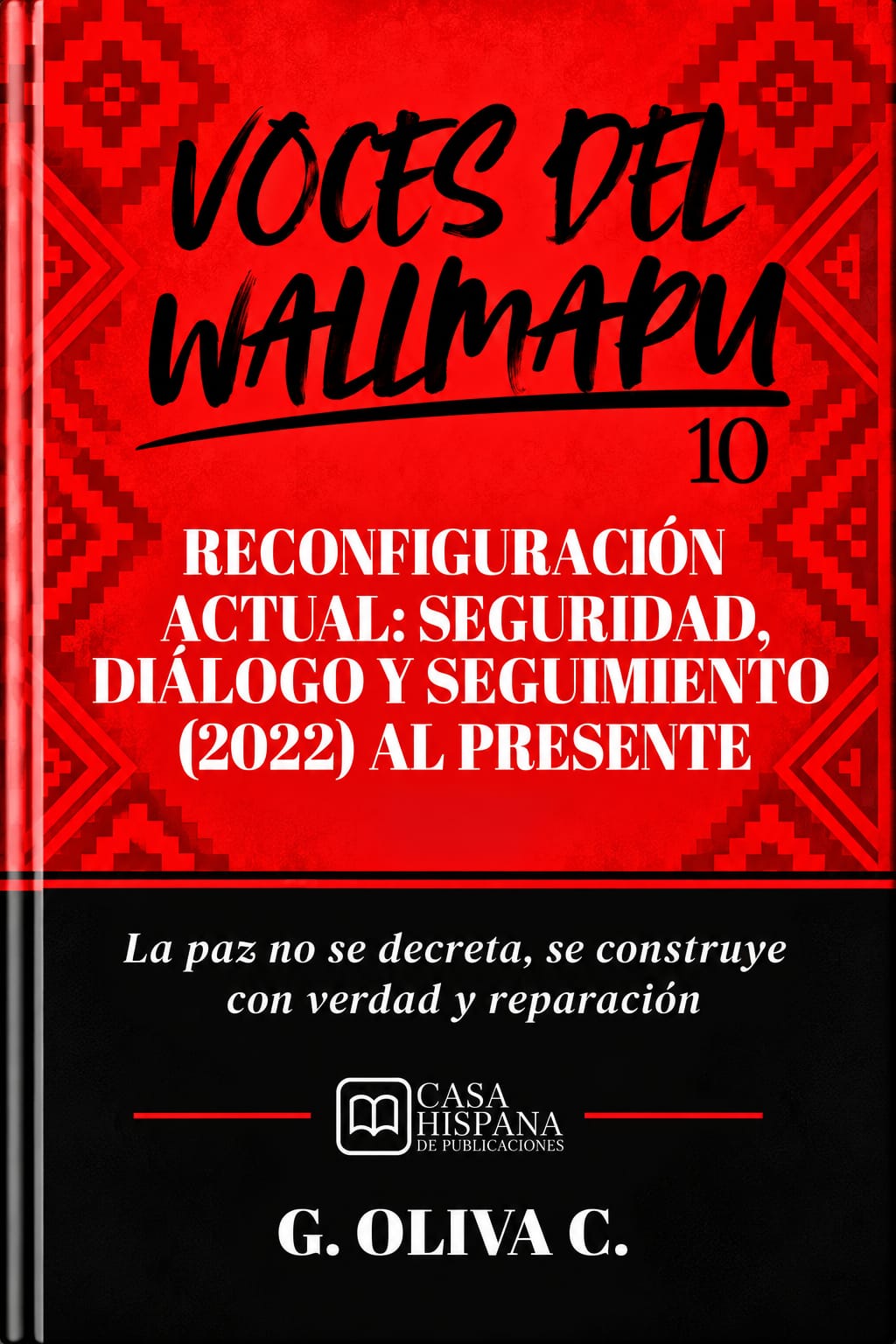
Current Reconfiguration: Security, Dialogue and Stalemate (2022–present) addresses the most recent and still unresolved stage in relations between the Chilean State and the Mapuche people. After more than a century of territorial occupation, reducción (the reservation-like land settlement regime imposed by the Chilean State), assimilation, Indigenous reorganisation, dictatorship, democratic transition, judicialisation, internationalisation and constitutional debate, from 2022 onwards the conflict enters a phase marked by a deep contradiction: the search for a political and territorial solution through dialogue coexists with the strengthening of policies designed to guarantee security and public order. The period begins in a context of high expectations regarding a new relationship between the State and Indigenous peoples. Proposals for recognition, territorial restitution, participation and dialogue once again became prominent on the public agenda. These aspirations, however, met a considerably more complex reality on the ground. The persistence of arson attacks, acts of violence, territorial claims, conflicts with companies and landowners, and the activity of radicalised organisations kept security at the centre of national debate. The State was thus faced with a twofold responsibility: to address the historical causes of the conflict and, at the same time, to guarantee the safety of everyone living in the affected territories. Between dialogue and security. One of the defining features of the period has been precisely the coexistence of these two approaches. On the one hand, institutional mechanisms have been promoted with a view to building agreements, reviewing territorial claims and establishing new forms of relationship with Indigenous communities. On the other, since 2022 a state of emergency has repeatedly been maintained in certain provinces of the south-central part of the country, accompanied by military participation in support of security operations. This situation expresses one of the greatest paradoxes of the contemporary period: while the State seeks political dialogue, it simultaneously maintains an extraordinary security strategy over part of the territory where the conflict is concentrated. The contradiction is not merely administrative. It reveals the historical difficulty of determining whether the question should be treated primarily as a territorial and political problem or as a matter of public security. Recent experience shows that the two are deeply intertwined. The constitutional process and its limits. The year 2022 was also marked by the outcome of a constitutional process that had given Indigenous peoples an unprecedented presence. The constitutional proposal put to a plebiscite incorporated concepts relating to Indigenous recognition, plurinationality, participation, territorial autonomies and legal pluralism. Its rejection at the ballot box represented a turning point. Academically, the result cannot be read as a specific rejection of Indigenous rights, since the electorate had to pronounce on a complete constitutional text containing numerous institutional transformations. The result did, however, reveal a significant political difficulty: the formulas proposed for redefining the relationship between the State and Indigenous peoples in constitutional terms failed to build a majority social consensus. The possibility of achieving constitutional recognition therefore remained pending. The search for a new understanding. After the constitutional process, Indigenous policy once again focused above all on the territorial question. The creation of a presidential body tasked with promoting peace and understanding represented an attempt to build a cross-cutting view of the historical claims. The aim was particularly ambitious: to identify mechanisms capable of responding to territorial claims accumulated over generations and, at the same time, to build conditions for coexistence among Indigenous communities, landowners, companies, farmers, workers and the inhabitants of the regions involved. This perspective marks a significant shift. The territorial problem ceases to be read solely as a succession of individual applications for land and begins to be treated as a historical question requiring long-term planning, institutional structures, funding and broad political agreements. Reaching consensus, however, has proved difficult. The complexity accumulated over more than a century means that Mapuche historical memories, contemporary legal titles, productive activities, urban and rural settlements, infrastructure and different development projects may all coexist over one and the same territory. Resolving these overlaps is one of the principal challenges facing the contemporary State. Security and coexistence. Security is inevitably another axis of the period. Acts of violence have affected communities, farmers, hauliers, workers, landowners and the inhabitants of the areas involved. From a democratic standpoint, no historical claim can justify attacks on people. But equally, the State's response to criminal acts should not lead to every Indigenous demand being interpreted as a threat to security. This distinction is fundamental. The Mapuche people, the Indigenous movement, territorial claims and organisations that use violence are not equivalent concepts. Responsible academic interpretation must distinguish between them. The overwhelming majority of Mapuche people live their lives outside any violent action. At the same time, the victims of crime and the residents affected have a legitimate right to demand protection from the State. Building coexistence requires both realities to be acknowledged at once. The meaning of stalemate. The notion of stalemate used in this volume does not mean an absence of initiatives. Over these years there have been territorial policies, processes of dialogue, public programmes, mechanisms for acquiring land, policing strategies and proposals for recognition. The problem is that none of these instruments has yet produced a structural agreement that is broad and stable enough. Territorial claims persist. Episodes of violence persist. Mistrust persists. Constitutional recognition remains pending. And the relationship between security and dialogue remains without a definitive solution. The conflict thus appears to shift between periods of greater tension and moments of political openness without yet reaching a point of resolution. A historical stage still open. This volume has a methodological peculiarity in relation to the previous ones: it studies events whose outcome we do not yet know. Contemporary history therefore demands particular caution. Recent decisions should not be presented as definitive successes or failures. Many of their consequences will only be assessable at a sufficient remove in time. There is, however, one historical finding that can already be stated. The Mapuche question can no longer be interpreted solely as a problem of land. Territory, identity, memory, collective rights, security, investment, economic development, the environment, constitutional recognition and intercultural coexistence now converge within it. Its contemporary complexity is precisely the result of the accumulation of every preceding historical stage. Final consideration. Current Reconfiguration: Security, Dialogue and Stalemate (2022–present) is the provisional point of arrival of a long history of relations between the State, territory and the Mapuche people. For more than a century, State policies have moved from occupation and reducción towards assimilation, integration, recognition, judicialisation, dialogue and the search for agreements. None of these stages, however, has managed to close the historical conflict completely. Contemporary experience shows that security without a political solution is insufficient, but that dialogue without security cannot build a sustainable coexistence either. The challenge lies precisely in overcoming that apparent contradiction. The State needs to guarantee democratic order and to protect everyone, whatever their identity or their position within the conflict. But it also needs to address the territorial and historical causes that have kept the Mapuche question open for generations. The period that began in 2022 can therefore be defined as a stage of reconfiguration and search. There is greater awareness of the historical depth of the problem. There is a more developed international framework of Indigenous rights. There are institutional mechanisms for dialogue. And there is also a strong social demand for security and coexistence. What does not yet exist is a consensus broad enough on how to integrate all these dimensions within a durable State policy. This volume, therefore, does not close the history. It leaves it open. After occupation, reducción, assimilation, reorganisation, counter-reform, limited recognition, judicialisation, internationalisation and institutional crisis, the contemporary question is no longer simply who holds title to particular lands. The question is considerably deeper: how is a democratic coexistence to be built that is capable of recognising the history and the rights of the Mapuche people, of resolving territorial claims responsibly, of guaranteeing security for all and of establishing a relationship of trust between the State and the communities? The answer to that question will determine the next chapter of a history that, to the present day, continues to be written…
Category
- SOCIAL SCIENCES
- HISTORY
- INDIGENOUS STUDIES
- MAPUCHE HISTORY
- STATE, TERRITORY, CONFLICT AND INDIGENOUS RIGHTS
Rights for this book
We turn publishing rights into international growth, connecting authors and publishers with new markets, new readers and new partners around the world.
Technical details
- Title
- Reconfiguración Actual: Seguridad, Diálogo y Estancamiento (2022–presente)
- Author
- G. Oliva C.
- Imprint
- Grupo Editorial Casa Hispana de Publicaciones
- Size
- 15x23cms
- Edition
- 1st edition, 2024
- Published in
- Chile
- Year of publication
- 2025
- Available languages
- Spanish, English, German, Portuguese
- Binding
- Paperback with flaps
- Pages
- 597
- Format
- Print book
- Language
- Spanish