Description
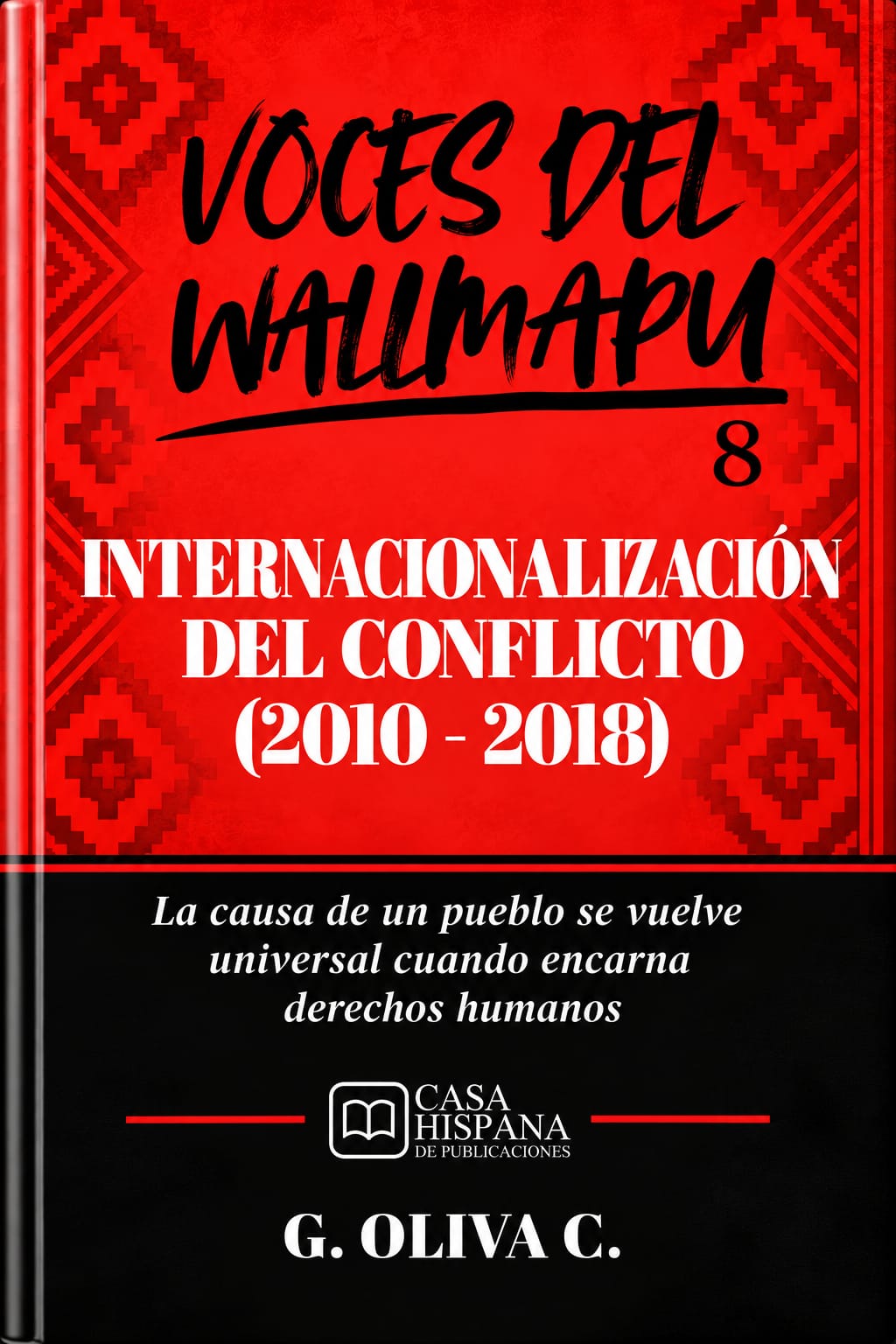
Internationalisation of the Conflict (2010–2018) addresses a decisive stage in the contemporary history of relations between the Mapuche people and the Chilean State. During these years, a dispute that for decades had been treated fundamentally as an internal territorial, political and legal problem began to take on an increasingly visible international character. Human rights bodies, international courts, United Nations rapporteurs and civil society organisations began to pay closer attention to questions of territory, Indigenous consultation, anti-terrorism legislation, the use of force, discrimination, due process and collective rights. The period does not mark the moment when the conflict first became known outside Chile. There were earlier precedents. Its historical particularity lies in the consolidation of that international character. The entry into force for Chile of ILO Convention 169 in September 2009 meant that the decade opened under a different legal framework. To this were added the 2007 United Nations Declaration on the Rights of Indigenous Peoples and the growing development of the inter-American human rights system. From then on, the State's conduct towards Indigenous peoples could be assessed not only under national legislation but also against international standards that Chile had assumed. That shift is the historical axis of the volume. From an internal question to an international one. For much of the twentieth century, Indigenous policy had been framed principally as a matter of internal sovereignty. The State decided on land, communities, education, property and development through its own institutions. The twenty-first century progressively altered that logic. The development of the international law of Indigenous peoples introduced categories such as consultation, participation, cultural identity, territorial rights and respect for a people's own institutions. This did not mean that international bodies came to govern Chilean Indigenous policy. The State retained its sovereign powers. But that sovereignty was beginning to be exercised within freely assumed international commitments. The question was no longer only: what does Chilean legislation allow? Now a further one had to be added: what international obligations has Chile assumed with regard to Indigenous peoples? This legal transformation would have profound consequences. 2010: a decade that begins in tension. The year 2010 makes the complexity of the new landscape immediately apparent. That year, a group of Mapuche community members held in custody went on a prolonged hunger strike. Among their principal objections was the use of anti-terrorism legislation in cases connected with the conflict. The mobilisation achieved considerable national and international visibility. The episode showed that judicial proceedings involving Mapuche activists would no longer be watched exclusively by Chilean courts, authorities and media. International organisations and human rights bodies began to follow them closely. The Mapuche question was definitively entering a transnational political space. Convention 169 and Indigenous consultation. One of the fundamental legal changes was the application of Convention 169 of the International Labour Organization, in force for Chile since 15 September 2009. The Convention established significant obligations regarding the participation and consultation of Indigenous peoples whenever particular legislative or administrative measures were liable to affect them directly. Consultation quickly became one of the central concepts of the debate. But also a source of controversy. What does it mean to consult? Who must be consulted? At what point? How should the procedure be conducted? Must agreement be reached? What happens when the State and the communities hold irreconcilable positions? These questions showed that ratifying a treaty was only the beginning. The real challenge lay in turning its principles into effective institutional practice. During this period Chile made progress in regulating consultation mechanisms, but debate continued over their scope, their methodology and their capacity to generate meaningful participation. Territory and natural resources. The internationalisation of the conflict cannot be understood in isolation from the territorial question. During these years, disputes continued over land, the forestry industry, energy projects and the use of natural resources. For certain communities, territory was inseparable from collective identity. For companies and landowners, there were legally protected property rights and economic activities. For the State, obligations to promote development, guarantee security, respect property and protect Indigenous rights all coexisted at once. This overlap turned the conflict into an extraordinarily complex problem. International law added something further: projects capable of directly affecting Indigenous peoples now had to be examined against standards of participation, consultation and cultural protection as well. The discussion of development thus began to take in a question that had previously occupied a secondary place: who takes part in deciding what happens within a territory historically bound to an Indigenous community? The Inter-American Court and the Norín Catrimán case. One of the most important legal events of the decade occurred in 2014. The Inter-American Court of Human Rights delivered judgment in the case of Norín Catrimán et al. (Leaders, Members and Activist of the Mapuche Indigenous People) v. Chile. The case examined convictions imposed on Mapuche leaders and activists through the application of anti-terrorism legislation. The Court found the Chilean State internationally responsible for violations of various rights recognised in the American Convention, including matters bearing on legality, the presumption of innocence, equality and non-discrimination, and judicial guarantees. The historical significance of the judgment was considerable. For the first time, one of the most contested chapters in the judicialisation of the Mapuche conflict was assessed in a binding judgment of an international human rights court. The conflict thereby moved onto a new plane. It was no longer only a matter of debating whether a given policy was politically expedient. What was now at issue was whether the State's conduct was compatible with international human rights obligations. Criminalisation under international scrutiny. The application of anti-terrorism legislation remained one of the most contested aspects of the period. The State maintained its obligation to investigate and punish serious crimes. Indigenous organisations and human rights bodies challenged the use of exceptional legislation in particular cases linked to territorial claims. The distinction is essential. To recognise Indigenous rights does not mean tolerating crime. But investigating crime does not authorise the disregard of fundamental guarantees or the discriminatory application of criminal categories. The democratic challenge lay precisely in holding both obligations at once. Growing international scrutiny gave this tension greater visibility. Violence and a more complex picture. While the international side of the conflict grew, the territorial conflict went on producing episodes of violence. Arson attacks, occupations of estates, confrontations and police operations remained part of the picture. One of the events with the greatest impact was the death of the married couple Werner Luchsinger and Vivianne Mackay in January 2013, during an arson attack on their home in Vilcún. The crime caused profound public shock. It recalled something that any scholarly enquiry must state clearly: the conflict also produced civilian victims and gravely harmed non-Indigenous families. A rigorous reading cannot select only those victims who confirm a particular interpretation. The deaths of Mapuche community members during police operations must be investigated and remembered. So must the victims of attacks committed within the context of territorial conflict. Human rights are universal. They do not depend on the identity of the victim. The death of Camilo Catrillanca. On 14 November 2018, the death of Camilo Catrillanca, a 24-year-old Mapuche man, during a police operation at Temucuicui, marked one of the greatest turning points of the period. Catrillanca died after being shot by a member of Carabineros during the operation. The case acquired enormous resonance not only because of the death itself but also because of the initial contradictions in the official accounts and the subsequent clarification of significant circumstances through judicial investigation. The existence and conduct of the so-called Comando Jungla, a police unit specially trained and deployed in the area, moved to the centre of public debate. The episode sharpened questions about police militarisation, the proportionality of the use of force and the relationship between Carabineros and Mapuche communities. The repercussions rapidly crossed Chile's borders. Catrillanca's death became an international symbol of the crisis of confidence between the State and sections of the Mapuche communities. The conflict before the United Nations During these years, different United Nations mechanisms continued to examine the situation of Indigenous peoples in Chile. The Special Rapporteurs on the rights of Indigenous peoples had made recommendations concerning recognition, land, participation, consultation and the use of criminal legislation. This international scrutiny did not mean that every claim made by Mapuche organisations was automatically endorsed. Its significance lay elsewhere: Chile was beginning to be assessed comparatively against international standards applicable to Indigenous peoples. The Mapuche situation could no longer be interpreted through national categories alone. It formed part of a worldwide discussion about how democratic States relate to Indigenous peoples with histories of colonisation, territorial loss and exclusion. The international mirror. This comparative perspective opened a new intellectual stage. The experiences of Indigenous peoples in Canada, New Zealand, Australia and other Latin American countries began to be used as reference points within the Chilean debate. Not because those models could be transferred automatically. Each country has a different legal and political history. But they made it possible to pose relevant questions. How are Indigenous peoples to be recognised constitutionally? How are mechanisms of participation to be established? How are historic territorial claims to be addressed? How are autonomy, citizenship and the unity of the State to be combined? How are processes of reparation to be built? The Mapuche conflict thus began to be viewed within a broader international problem. From cultural recognition to collective rights. During the 1990s, much of Indigenous policy had revolved around cultural recognition, development and the acquisition of land. Between 2010 and 2018 the political language widened. Concepts such as self-determination, autonomy, consultation, territory and collective rights became more central. This change was not confined to Chile. It formed part of the international evolution of Indigenous law. The 2007 United Nations Declaration had expressly recognised the right of Indigenous peoples to self-determination, within the framework developed by that instrument itself. For certain Mapuche sectors, this international language offered new tools for formulating historic demands. The question was no longer simply one of recovering hectares. It was a matter of debating what political relationship should exist between the Mapuche people and the Chilean State. Media, social networks and global visibility Internationalisation was not exclusively legal. It was also a matter of communication. During this decade, the internet and social media profoundly transformed the circulation of information. A police operation carried out in a community could be recorded and circulated within moments. A complaint could reach international organisations within hours. Mapuche activists could establish links with Indigenous movements in other countries. The narrative of the conflict ceased to be controlled exclusively by traditional media or State institutions. A far more fragmented communicative space emerged. This made it possible to bring to light situations previously unknown. But it also introduced new problems: incomplete information, images without context, polarised rhetoric and competition between narratives. The conflict became a dispute over the public interpretation of events as well. Internationalisation does not mean solution. One of the volume's fundamental conclusions is that internationalisation increased political and legal pressure but did not automatically resolve the conflict. Chile now had more standards. More international mechanisms. More scrutiny. More case law. More consultation procedures. And yet the territorial disputes continued. Violent acts continued. Police operations continued. Distrust continued. This apparent contradiction shows that law is indispensable but insufficient on its own. A historic conflict also requires politics, dialogue, legitimate institutions and the capacity to build agreements. A history of competing narratives. Between 2010 and 2018 different interpretations of what was happening also hardened. For sections of the Mapuche movement, this was fundamentally a process of territorial recovery and of the exercise of collective rights. For landowners and victims of violence, the problem had to do with security, attacks and the protection of the rule of law. For the State, problems of Indigenous policy and of public security coexisted. For international bodies, questions arose about Indigenous rights, discrimination, proportionality and due process. These narratives did not always speak to one another. Frequently they competed. Each sector had facts, memories and experiences that it regarded as fundamental. The difficulty lay in building an understanding capable of acknowledging all those realities at once. Taking stock of the period. By the end of 2018, the historical reckoning was deeply contradictory. Chile had ratified Convention 169. Indigenous consultation had been built into the workings of the State. International case law had set important limits. Indigenous rights had greater visibility. Mapuche identity had a considerably greater public presence. But at the same time: the territorial conflict persisted; episodes of violence continued; a heavy police presence remained; there was profound distrust; Mapuche and non-Mapuche people had died; and the State had still not found a comprehensive strategy capable of bringing together recognition, security, territory and coexistence. The Mapuche question was by now unquestionably national. But it was also international. Internationalisation of the Conflict (2010–2018) describes a stage in which the old conflict between State, territory and the Mapuche people began to be observed from a far wider legal and political vantage point. The history that began with the military occupation of the nineteenth century had passed through territorial reduction, assimilation, political reorganisation, the Agrarian Reform, dictatorship, the democratic transition and judicialisation. Now it was entering a new phase: the internationalisation of its demands, its controversies and the standards by which it is judged. Convention 169 altered the legal framework. The United Nations Declaration widened the language of rights. The Inter-American Court established concrete responsibilities. International bodies increased their scrutiny. Social media globalised images and complaints. And the conflict began to engage with Indigenous experiences elsewhere in the world. But this growing international relevance exposed a paradox. Chile had moved faster in formally incorporating international standards than in building a stable political solution to the conflict. The law was advancing. Recognition was advancing. Visibility was advancing. But confidence went on deteriorating. The death of Camilo Catrillanca in 2018 dramatically symbolised that contradiction. After decades of democratic institutions and almost a decade with Convention 169 in force, relations between communities, police and the State were still shot through with a profound crisis. This volume therefore does not present internationalisation as the triumph of one side over the other. It presents it as a new historical scale of the problem. The Mapuche question had definitively ceased to be intelligible as an exclusively rural, regional or policing matter. It had become a debate about democracy, territory, human rights, Indigenous peoples, development, security and the legitimacy of the State. The period 2010–2018 thus leaves a fundamental question for the stages that follow: can a State confine itself to complying formally with international standards, or must it also transform the political, territorial and institutional structures that continue to reproduce the conflict? The answer to that question would determine much of the new stage that would open from 2019, when the Chilean social crisis, the constitutional debate and the growing political centrality of Indigenous recognition would carry the Mapuche question into an even more complex national arena…
Category
- SOCIAL SCIENCES
- HISTORY
- INDIGENOUS STUDIES
- MAPUCHE HISTORY
- STATE, TERRITORY, CONFLICT AND INDIGENOUS RIGHTS
Rights for this book
We turn publishing rights into international growth, connecting authors and publishers with new markets, new readers and new partners around the world.
Technical details
- Title
- Internacionalización del Conflicto (2010–2018)
- Author
- G. Oliva C.
- Imprint
- Grupo Editorial Casa Hispana de Publicaciones
- Size
- 15x23cms
- Edition
- 1st edition, 2024
- Published in
- Chile
- Year of publication
- 2025
- Available languages
- Spanish, English, German, Portuguese
- Binding
- Paperback with flaps
- Pages
- 568
- Format
- Print book
- Language
- Spanish